 ASSEDEL
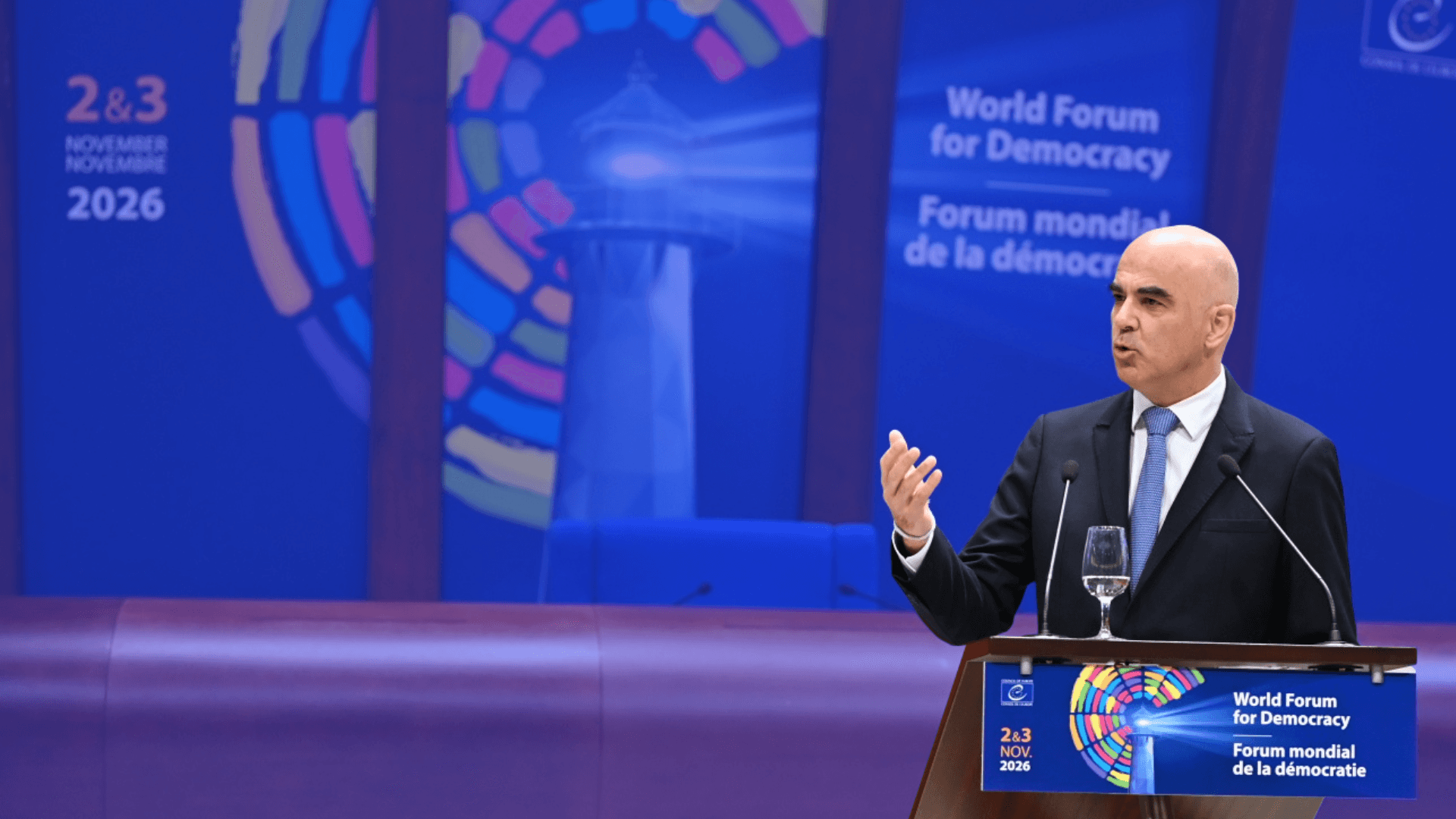
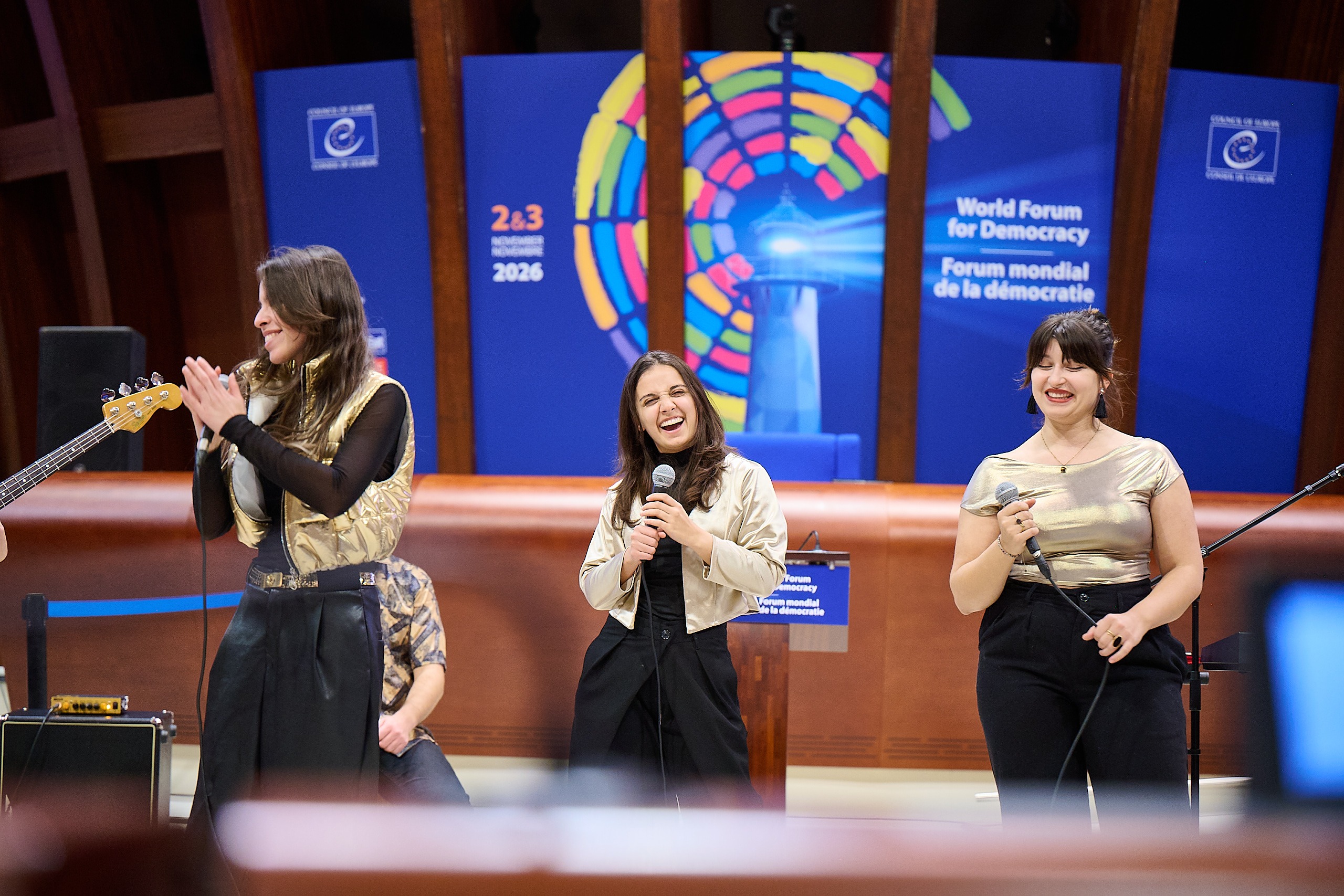
Democracy is not in crisis, but it is going through a profound rupture. This diagnosis set the tone for the 14th World Forum for Democracy, which brought together political leaders, civil society, academics and young people at the Council of Europe in Strasbourg on 2 and 3 November 2026, under the theme “Rupture or Renewal? Democratic Security for Our Future”. ASSEDEL attended the Forum throughout, following both the plenary sessions in the Hemicycle and the parallel sessions and labs.
This year’s edition was part of the consultation phase of the New Democratic Pact for Europe, the Council of Europe’s initiative to build a more effective, inclusive and far-reaching democracy. The conclusions of the Forum will feed into the New Democratic Pact for Europe, on which the Committee of Ministers is expected to take decisions at its Ministerial Session in May 2027.
Over two days, the Forum moved from diagnosis to action. The first day examined the forces straining democratic societies, from growing inequalities and shrinking civic space to disinformation and foreign interference, and turned them into scenarios for the future. The second confronted those scenarios with concrete solutions put forward by institutions, civil society and young people from across the world. Five issues ran through the discussions: democratic security, democratic foresight, socio-economic injustice, youth and democratic initiatives. The sections below retrace the Forum session by session, highlighting how each contributed to these debates.
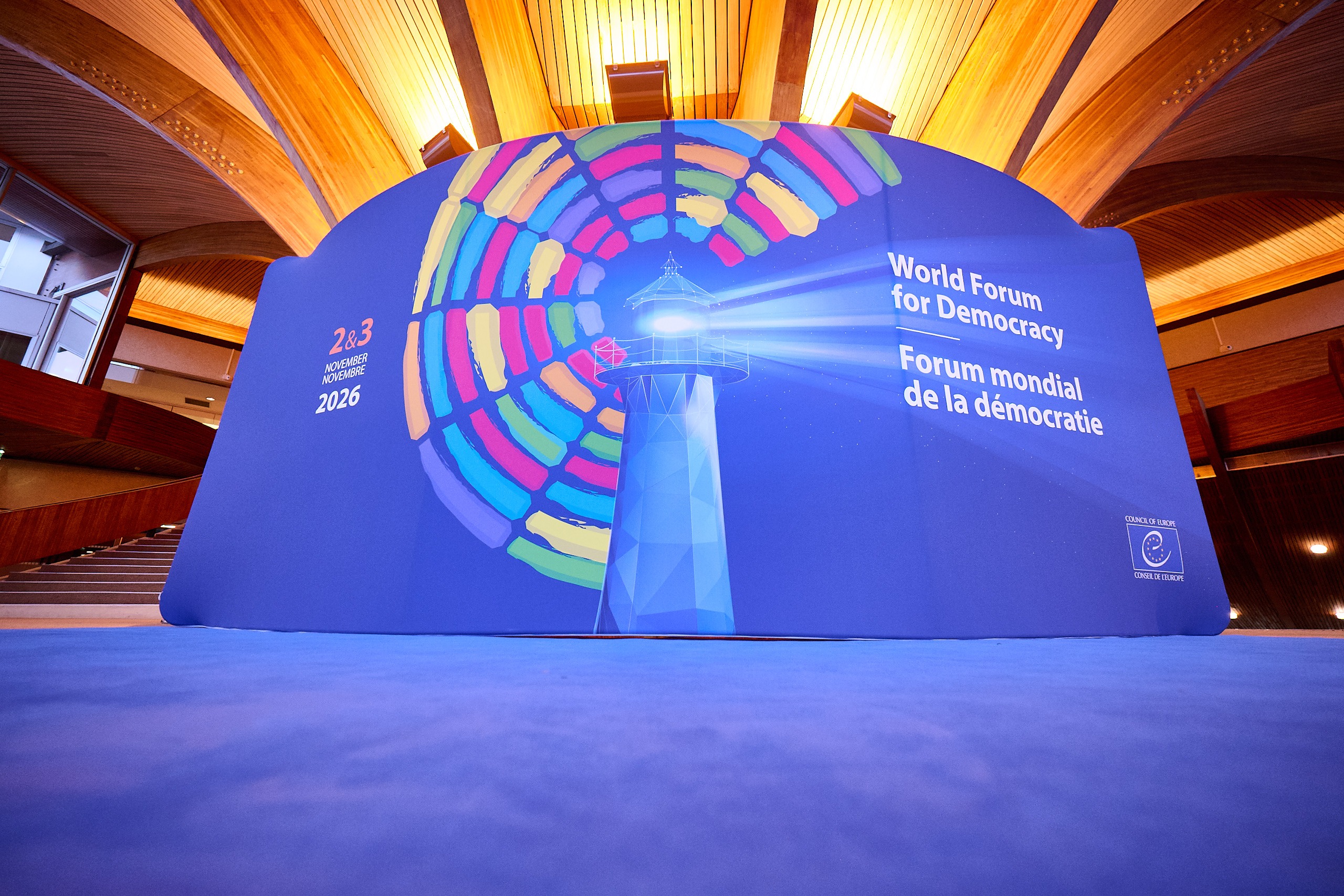
Day One – Opening Plenary: Strengthening Democracy for Disrupted Times
The World Forum for Democracy 2026 was opened by Petra Bayr, President of the Parliamentary Assembly of the Council of Europe, who warned that the most dangerous threats to democracy are often the silent ones: disinformation that gradually erodes citizens’ capacity to trust, and incremental measures, such as laws weakening judicial independence or the silencing of journalists, that hollow out institutions almost unnoticed. Describing cuts to youth work as self-defeating, she called for young people to be given a real say in decisions, not only a voice on the future.
Building on this call, Secretary General Alain Berset pointed to the youth-led movements of recent weeks, from Serbia to Indonesia and India: decentralised, yet emerging simultaneously across continents. When citizens feel that the system no longer works for them, he warned, authoritarian actors are quick to offer simple answers and scapegoats, and Europe cannot accept less democracy in exchange for more security. Democracy’s future, he concluded, depends on the choices societies make today, and democratic security, public trust and youth engagement should stand at the core.
Picking up the question of trust, Guy Ryder, UN Under-Secretary-General for Policy, reminded the room that trust cannot be demanded; it must be earned. In the digital age, he argued, earning it means protecting people’s ability to make informed choices: defending freedom of expression, backing independent media and holding technology platforms to higher standards of transparency. Croatian Prime Minister Andrej Plenković then returned to democratic security, anchoring it firmly in the rule of law, from respect for international law, sovereignty and territorial integrity to compliance with the judgments of the European Court of Human Rights. Independent courts, free media and parliamentary oversight, he insisted, should be seen as the foundations of security, rather than obstacles to it.
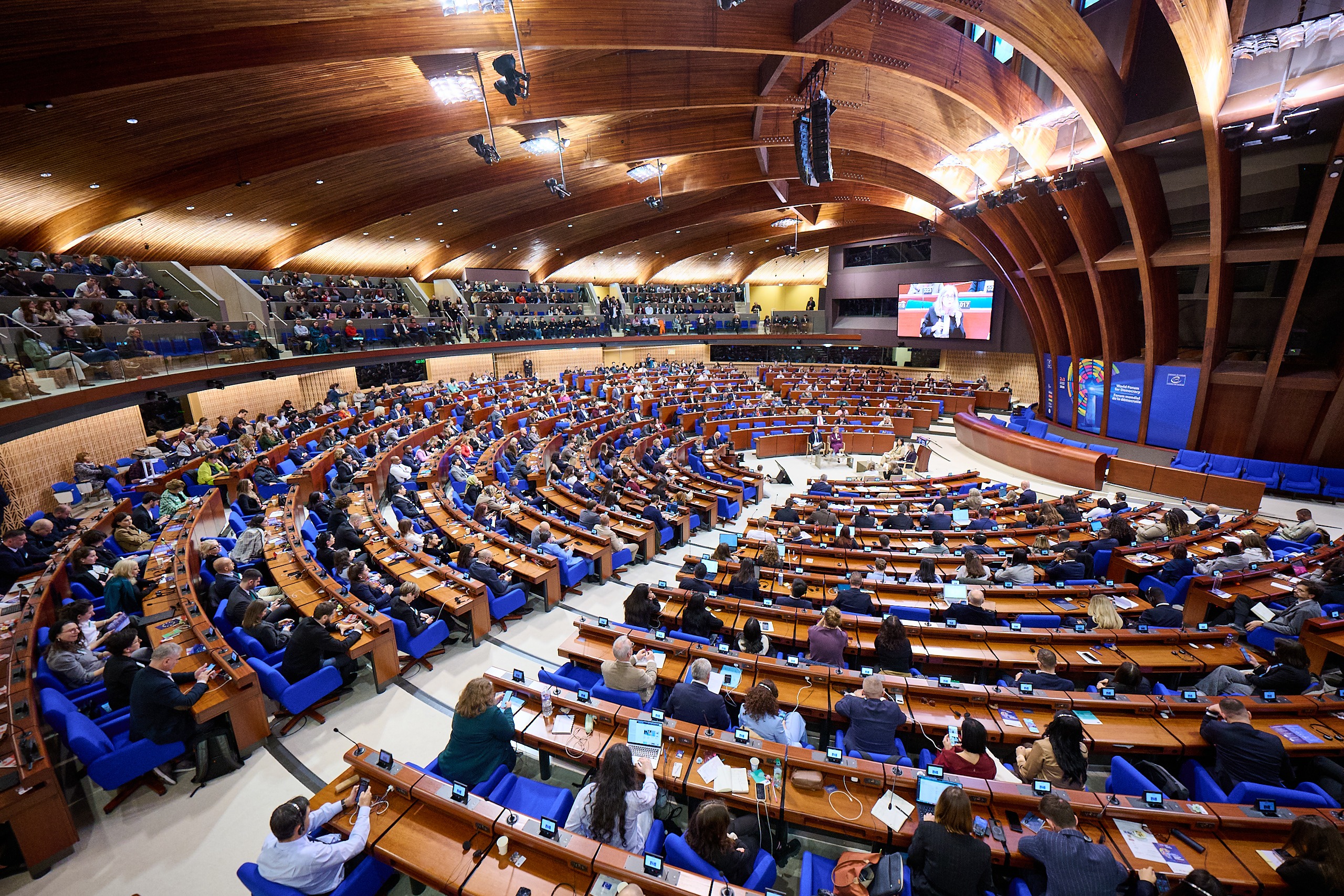
Morning Plenary Session, Day One: Democratic Foresight, and the Transformations Shaping Europe
The rest of the morning brought together two panels, moderated by journalists Liz Alderman and Emma Nelson. The first, “Democracy Needs Strategic Foresight”, brought together Ambassador Nathalie Chuard (DCAF), Michèle Griffin (United Nations), Věra Jourová (Task Force Democracy27) and César Villanueva Esquivel (Ministry of Foreign Affairs of Mexico). Democratic foresight was presented not as an attempt to predict the future, but as a participatory method to detect emerging trends, understand their implications and act on a shared long-term vision. As stressed by Ambassador Chuard stressed, democratic foresight matters for security too: risks should be assessed together with civil society, independent media and citizens, whose involvement builds the public trust on which effective security depends.
The second panel, “What Is Transforming and Shaping Europe?”, gathered Professor Olivier De Schutter (Catholic University of Louvain), Professor Aoife Nolan (European Committee of Social Rights), Mark Pearson (OECD), Professor Mary Kaldor (London School of Economics), Janis Sarts (NATO Strategic Communications Centre of Excellence) and Professor Motohiro Tsuchiya (Keio University). The message was clear: disinformation is a symptom, while the real driver of distrust is social and economic insecurity. Rebuilding trust means treating social protection as a right and an investment in democracy, not a cost, and giving young people, who are unrepresented rather than disengaged, a real place in decision-making.
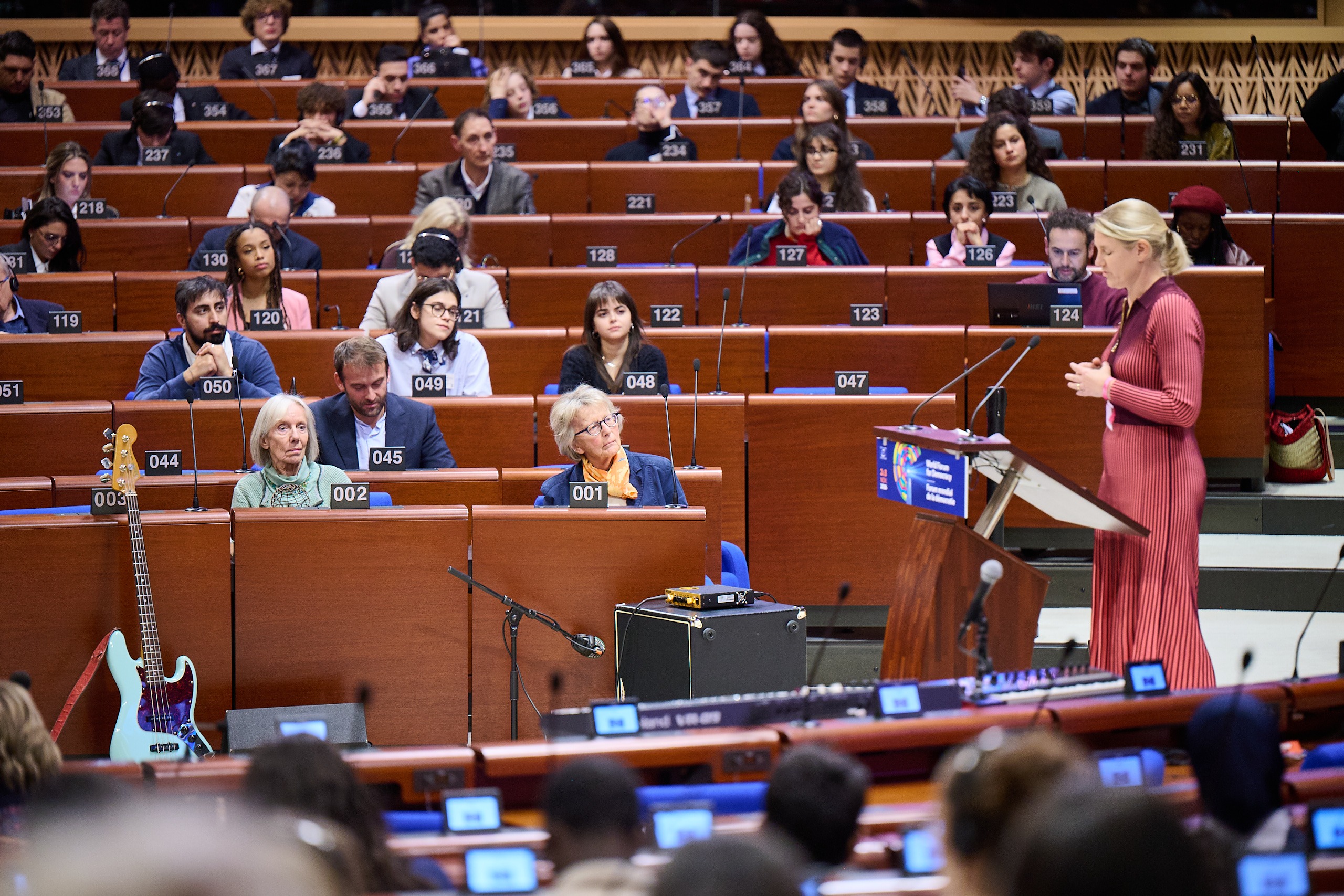
Afternoon Sessions: (Re)building Democratic Security and Foresight
In the afternoon, nine parallel sessions on (Re)building Democratic Security and Foresight explored these challenges, first from citizens’ and then from institutions’ perspectives. Topics included civic engagement, intercultural inclusion, the role of local authorities, a Europe–Africa dialogue, demographic change and economic actors, national foresight exercises, resilience to disinformation and foreign information manipulation and interference, and creative political processes. Together, they turned the morning’s diagnosis into scenarios for the second day to test.
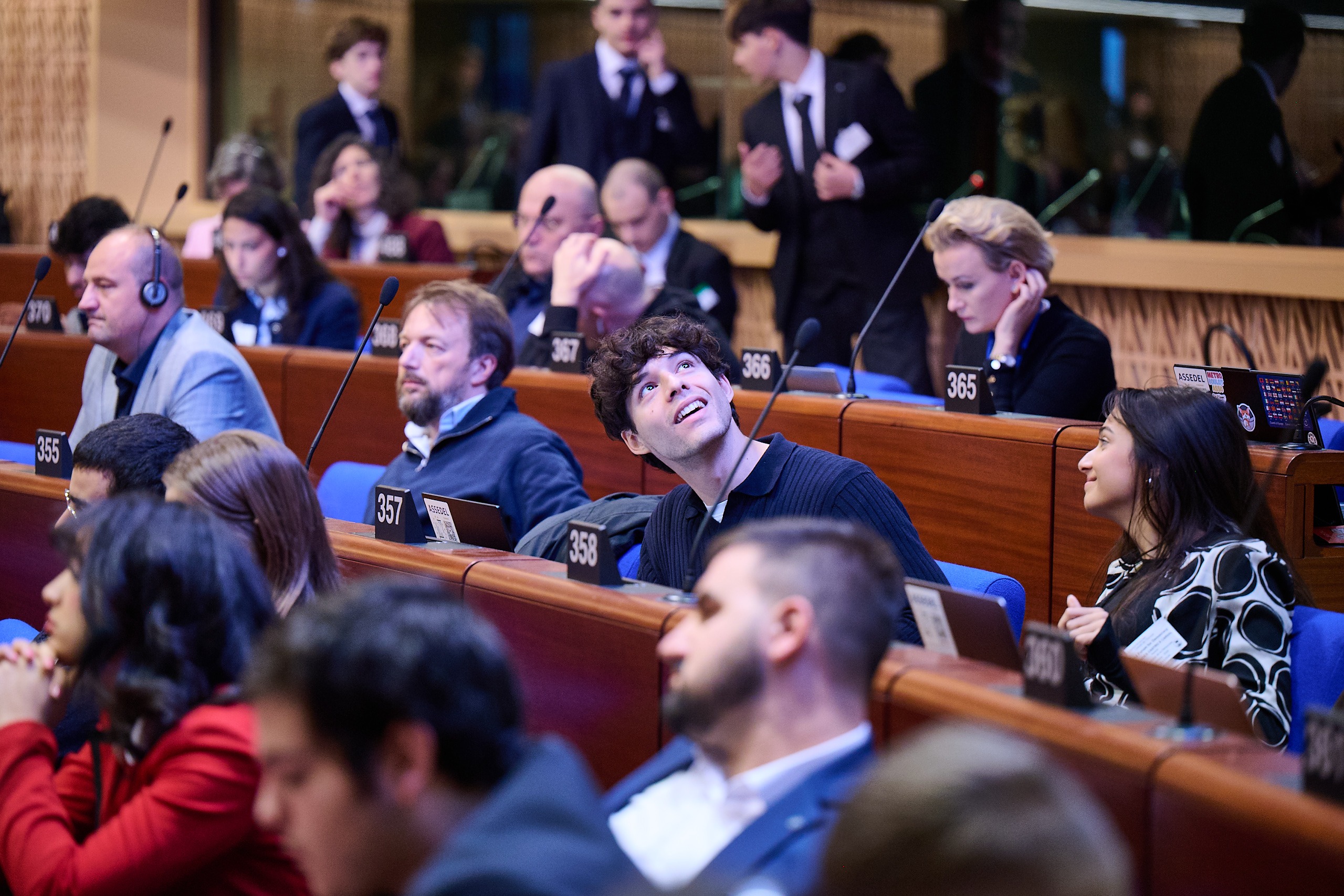
Morning Plenary Session, Day Two: Sharing Solutions and Putting Council of Europe Insights to the Test
The second day opened with former Moldovan Prime Minister Natalia Gavrilița and Mattias Guyomar, President of the European Court of Human Rights. In particular, Guyomar described the protection of the rule of law and pluralism in Europe not only as a matter of principle, but as an existential issue, and stressed that the Convention system cannot tolerate actions that undermine the rule of law and the values on which the Council of Europe is founded, in particular human rights, peace and justice.
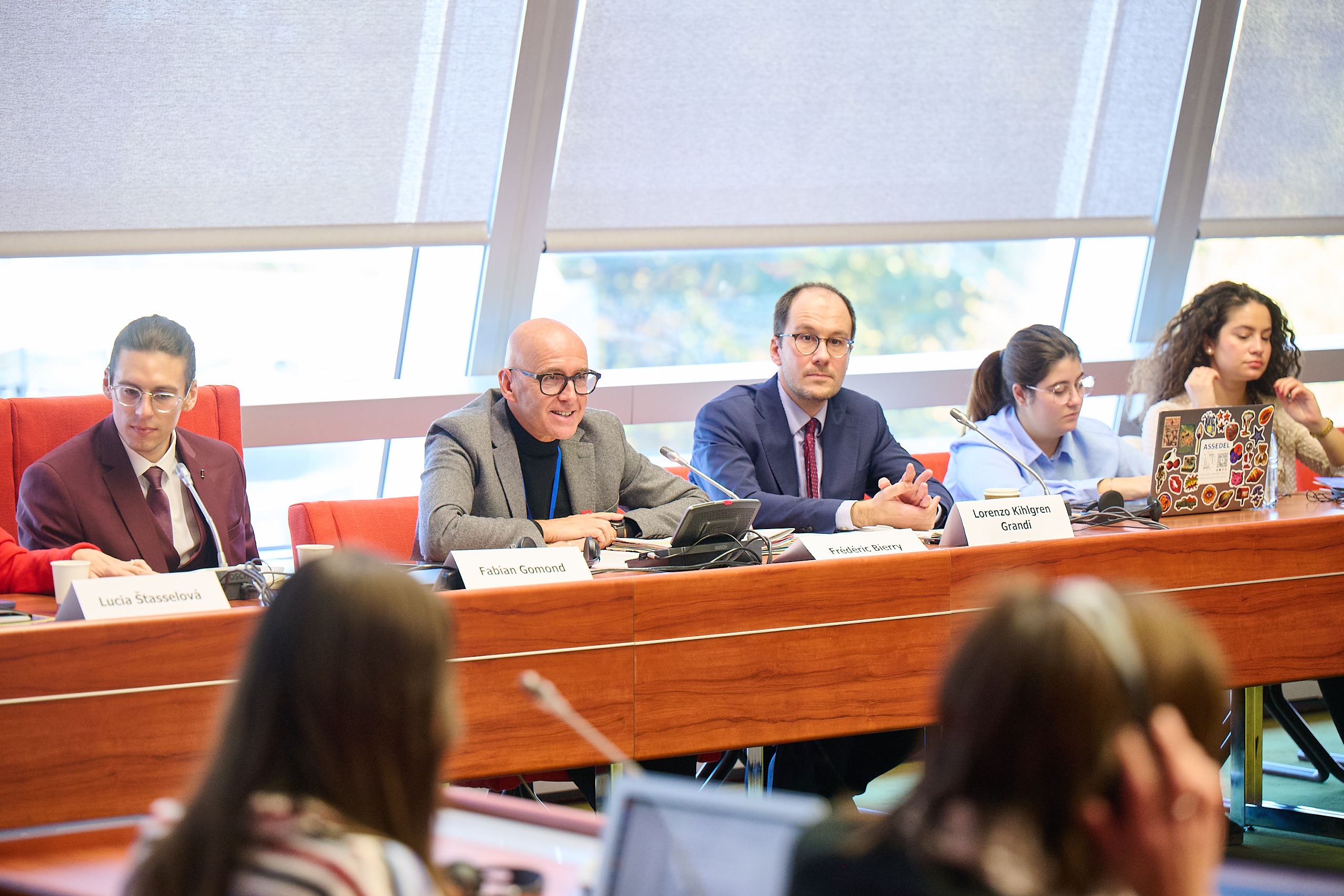
Two panels followed, again moderated by Liz Alderman and Emma Nelson. The first, “Sharing Solutions”, featured Ambassador Delphine Delieux (Rapporteur Group on Democracy), Gunn Marit Helgesen (Congress of Local and Regional Authorities), Jeffry Jeanty (youth civil society representative), George Papandreou (PACE General Rapporteur on Democracy) and Aleksa Pavlović (Serbian Student Movement). Its message was that citizens should not only be consulted, but help design the solutions themselves. From Ireland’s citizens’ assemblies and Belgium’s permanent citizen dialogue to the faculty assemblies of Serbian students and a youth manifesto for a democratic Europe in 2049, speakers showed how power can be shared at every level, with young people treated as not only the future, but also the present.
The second, “Putting Council of Europe Insights to the Test”, featured Wim Geerts (Dutch Ambassador for Human Rights), Eirik Holmøyvik (Venice Commission), Maria-Andriani Kostopoulou (GREVIO), Aikaterini Polyzou (CDMSI) and Marialena Tsirli (European Court of Human Rights). Its question was how the Council of Europe’s monitoring of national developments can help states take sound democratic decisions and withstand backsliding, since threats such as disinformation cross borders and no single institution or country can face them alone.
Afternoon Labs: Confronting Concrete Initiatives Against the Future Scenarios
In the afternoon, seven labs under the heading “Confronting concrete initiatives against the future scenarios” put the previous day’s scenarios to the test, examining initiatives from around the world under the three pillars of the New Democratic Pact for Europe. Topics included media and information literacy, digital tools for civic engagement, citizen mobilisation for climate, social justice and public services, electoral and democratic integrity, inclusive democracy free from hate speech, and the opportunities and risks of artificial intelligence. Through the presentation of initiatives that are already making a difference on the ground, they showed how democratic foresight can be translated into concrete action.
Closing session: Conclusions and Key Takeaways
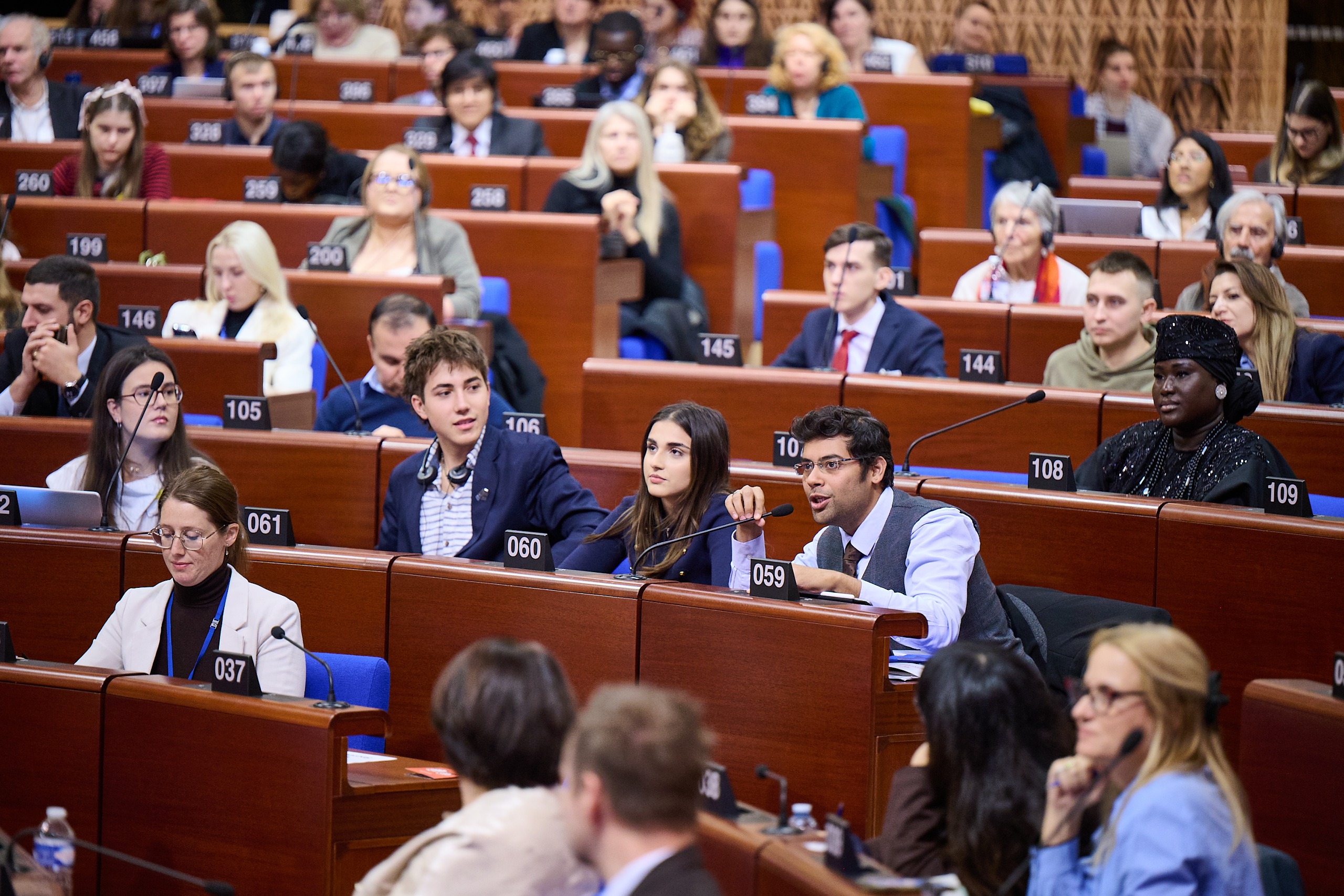
Closing the Forum, General Rapporteur Richard Youngs summarized two days of debate in five key insights. First, the understanding of democratic security is shifting: once focused mainly on defence spending, it is now moving towards participation and pluralism, though the security and democracy agendas still need to be brought together. Second, democratic foresight is not about hypothetical future risks. With Europe some fifteen years into a democratic recession, the challenges are already here, and democracies are best defended by being improved, through foresight processes that must themselves become more participatory. Third, socio-economic injustice, from inequality to the cost of living and housing, must be tackled for democracies to prosper, and citizens need a voice in the difficult trade-offs involved. Fourth, youth cannot be treated as a uniform category, and youth initiatives should be woven into mainstream politics rather than confined to youth forums. Finally, the unprecedented wave of democratic initiatives calls for a closer understanding of why some succeed and others do not, a task he entrusted to the Council of Europe and the New Democratic Pact.
After his address, Emma Wedner, Chair of the Advisory Council on Youth, underlined that young people’s voices and perspectives are critical and must be included. Closing the Forum, Deputy Secretary General Tanja Gonggrijp then presented the Democracy Innovation Award, voted on by the Forum’s participants, to KlimaSeniorinnen Schweiz, the association of older women whose strategic litigation brought Swiss climate policy before the European Court of Human Rights. In her closing speech, she warned that the feeling that one’s voice makes no difference is among the greatest threats to democracy, and concluded that inclusive democracies are stronger democracies, which can strengthen and regain citizens’ trust.
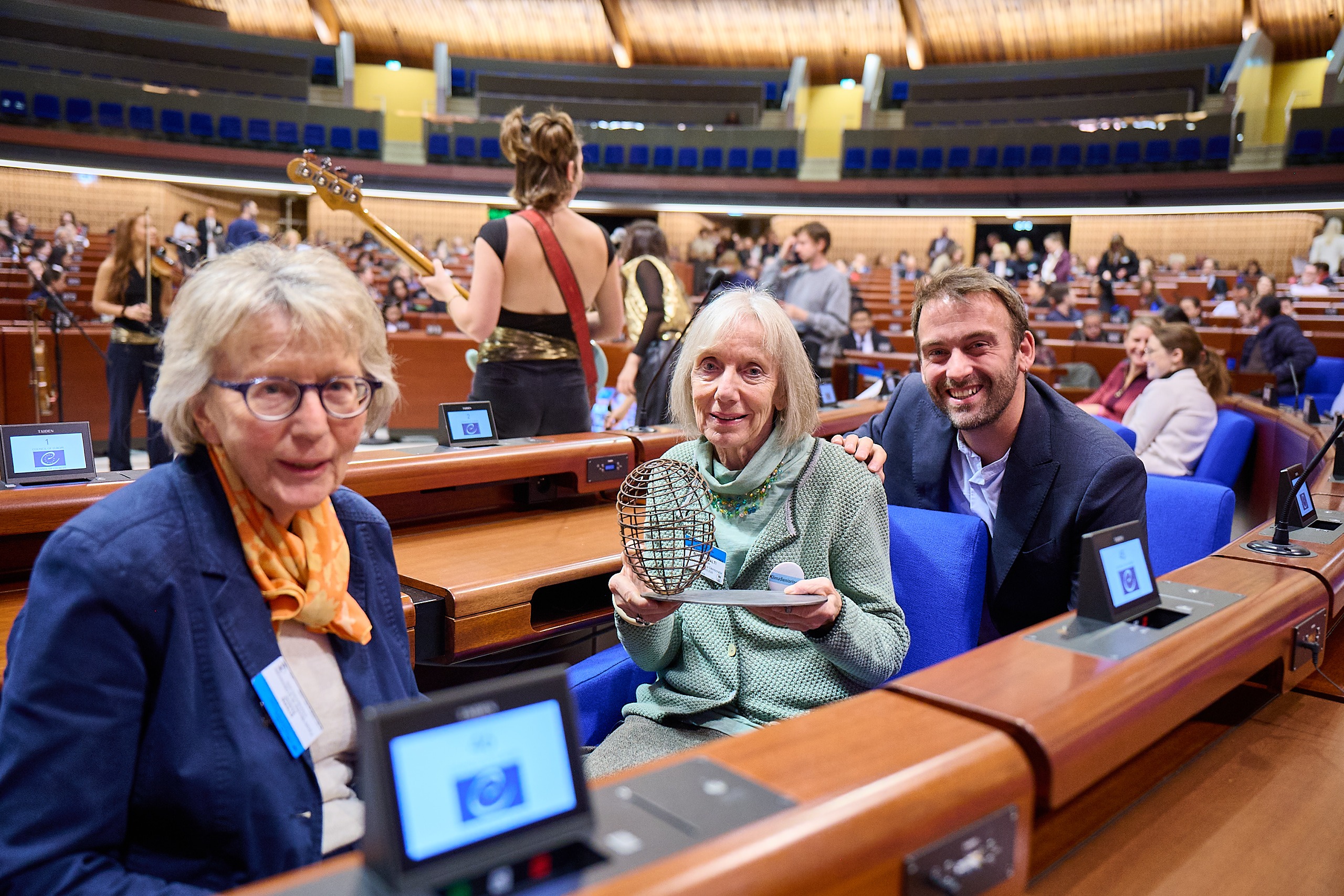
For ASSEDEL, the Forum confirmed that the answer to the current rupture lies in more democracy, not less, and that civil society and youth participation will be crucial for democratic renewal. As a civil society organisation closely engaged in ECtHR-related proceedings, ASSEDEL welcomed the decision to give this year’s Democracy Innovation Award to KlimaSeniorinnen Schweiz: a reminder that human rights judgments matter for democracy, but make a difference only when they are fully implemented. Working alongside the Council of Europe and its human rights system, ASSEDEL will closely follow the next phase of the New Democratic Pact for Europe.