 ASSEDEL
Contents (6)
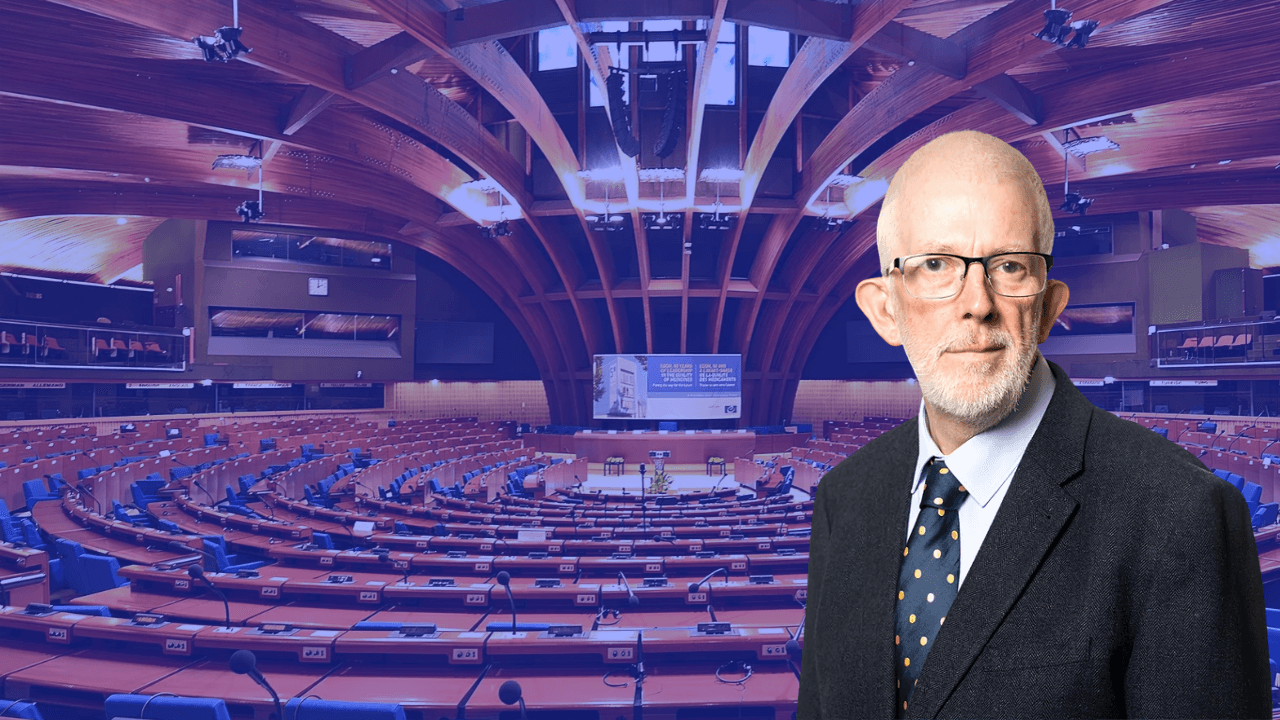
Mr. Stewart Dickson, Member of the Congress of Local and Regional Authorities from United Kingdom, spoke to ASSEDEL during the 51st Congress session held at the Council of Europe about democratic backsliding and the role of observers in local and regional elections.
When people picture an attack on democracy, they usually picture a national election: a cyber-attack on a parliamentary vote, or foreign money flowing into a general campaign. Mr. Stewart Dickson says that picture is incomplete. “The reality is a lot of those attacks on democracy are coming from the bottom up,” he told ASSEDEL, and that is why, in his words, it is essential to build “all of the appropriate layers of protection” around elections.
That argument sits at the centre of the Congress’s new report on election observation, which calls for a dedicated Council of Europe instrument on the subject. For Mr. Dickson, it is a practical response to a gap he has been describing for some time.
A protection gap at the local level
When asked whether a dedicated instrument could give local and regional elections the same human rights protection as parliamentary ones, he was direct.
Parliamentary elections already benefit from human rights protection, he explained, but the same protection does not exist in law for local and regional elections. There is “very strong pressure” from the Congress to change that, and the issue will be debated in the Congress. The reason is that interference in local and regional elections is growing. Asked whether the new report is a practical step towards protecting local and regional elections, his answer was short: “Yes, most definitely it is.”
Fake observers
The report also points to a growing problem: observers who do not observe. Mr. Dickson described how the Congress, which is often the only international observer at local and regional elections in a member state, sometimes arrives to find a group of “concerned citizens” acting as observers. When you look behind them, he said, they may have been placed there by a political party or by a foreign actor, either to intimidate voters or to push them towards a particular party.
His remedy is accreditation. “There needs to be rigorous approval for anyone who observes an election, whether domestically or internationally,” he said. The difficult balance, which the report raises, is keeping false observers out without making life harder for genuine, independent ones. Mr. Dickson did not name a single body that should decide who is credible, but his answer makes clear that the decision must rest on a rigorous, transparent approval process and not on informal presence at the polling station.
Türkiye: unclear rules, mayors in prison
The report places Türkiye among the countries where election observation is not enshrined in law and where, as the question put to Mr. Dickson described it, only party and candidate representatives can be present at polling stations.
Mr. Dickson did not describe the situation as only a legislative gap. He placed it within what he called “a broad range of issues” with Türkiye, starting with the treatment of mayors. Democratically elected mayors have been imprisoned “for reasons which really any serious individual would question,” he said. He warned of a further consequence: people who are arrested may never go through a judicial process, yet an arrest can still mean they cannot stand for election in future. “The rules around elections in Türkiye are unclear and they are insufficient, in our view, and further protections need to be built in,” he said.
Advisory power, and the power of citizens
Can a report change things in a state that is moving away from observation? Mr. Dickson was frank about the limits. The Congress writes serious reports, and issues can be referred to the Council for Democratic Elections and ultimately to the Venice Commission, but “in the final analysis they are advisory.” The Congress has “no particular powers to enforce any of this”. What it has, he said, is something like “embarrassment power” over a large and influential state that has received critical reports.
He added that real power also lies with individuals. Next to the Council of Europe building sits the European Court of Human Rights, and citizens have “that ultimate freedom” to bring complaints there.
Civil society and young people
Asked what civil society can do to prevent democratic backsliding, Mr. Dickson pointed to the Youth Congress taking place that week. He had listened to young delegates speak in the hemicycle that morning. “Young people’s participation in democracy is vitally important to protect democracy going forward,” he said, calling himself “a passionate believer” that democracy must be passed between generations. Young people, he said, should be free to make their own choices about how their communities are run, and “they themselves can and should be those politicians.”
What this means
Mr. Dickson’s message is that backsliding is not only a national story. It happens in town halls and polling stations, through fake observers, unclear rules and the imprisonment of elected mayors. A dedicated Council of Europe instrument on election observation would give local and regional elections the protection that parliamentary ones already have. But he is realistic that, without enforcement powers, change will depend on pressure from the Congress, the Venice Commission, the courts and citizens themselves, including the young people who will have to defend democracy next.
Watch the full interview here: https://youtu.be/wDEmWj0JkCo