 ASSEDEL
Where the report stands
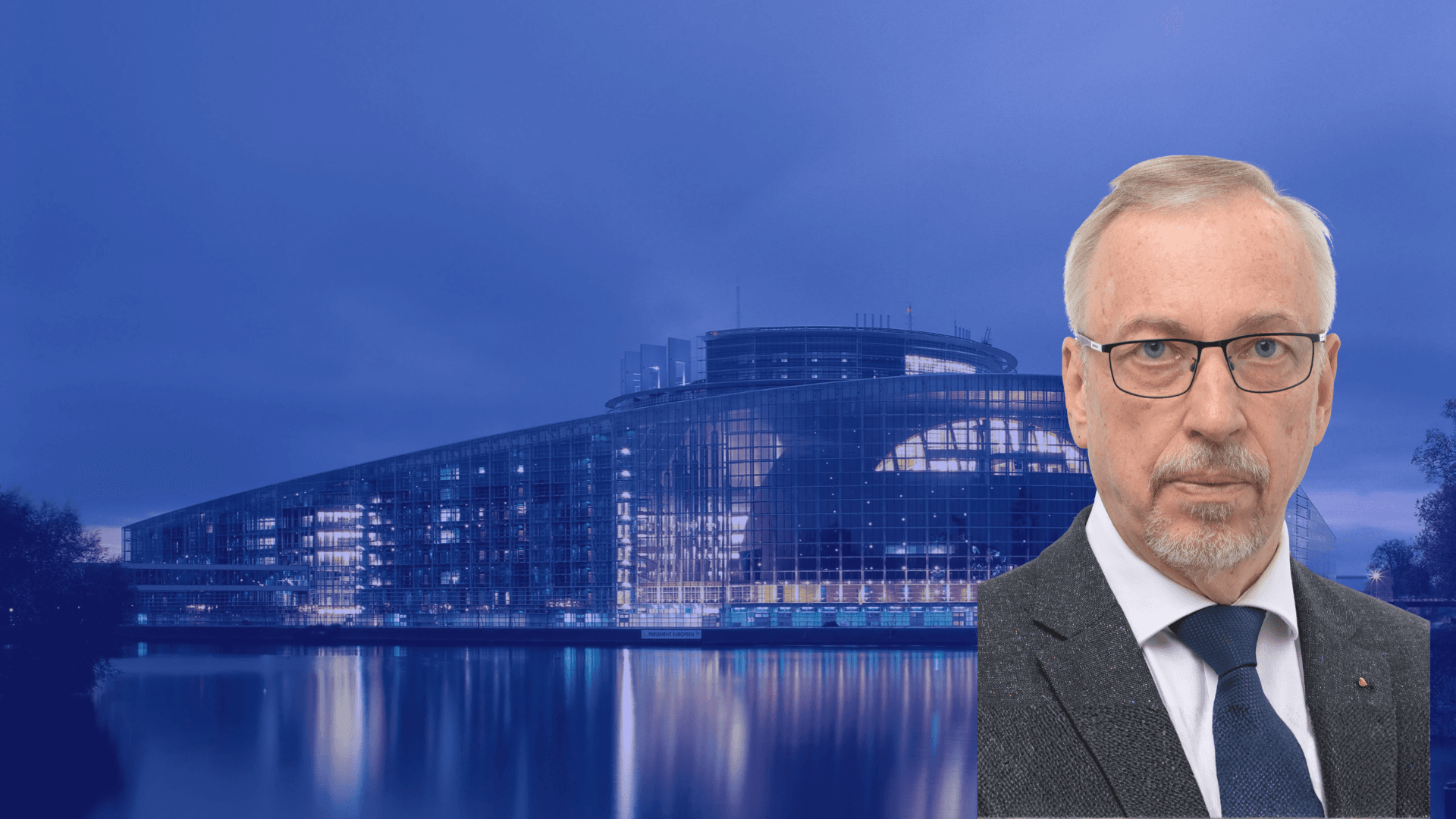
The report has now passed the main stages in Parliament. The Committee on Culture and Education (CULT) approved its position on 29 September, by 24 votes in favour, 1 against and 1 abstention. On 22 October, in Strasbourg, MEPs adopted their mandate for negotiations with EU member states on the 2028–2034 programme, with 454 votes in favour, 34 against and 93 abstentions. Adoption in plenary does not end the process. The Parliament's position now becomes its mandate for negotiations with the Council, with the European Commission, which made the original proposal, taking part in the talks. The regulation requires agreement with the Council, and final funding depends on negotiations on the 2028–2034 multiannual financial framework, so the €47.4 billion figure remains a negotiating request. In May 2026 the Council adopted a partial negotiating position that leaves financial questions aside.
Increasing the Erasmus+ budget
The central point of the report is a significant increase in funding. Parliament calls for approximately €47.4 billion for 2028–2034, compared with the €40.8 billion proposed by the Commission, a difference of about €6.6 billion. Zdrojewski stressed that the increase looks even larger against the roughly €26 billion allocated under the current financial framework. He gave several reasons for more funding: inflation, growing demand for exchanges and the consequences of the COVID-19 pandemic, which prevented many potential participants from taking part. Beyond these practical arguments, he emphasised the wider role of Erasmus+ in strengthening European identity and mutual understanding. In his view, the programme has helped build a community of people who know more about European institutions, education systems and cultural diversity.
Opening the programme to more people
Erasmus+ is mostly associated with university exchanges, but Zdrojewski argued that its opportunities should reach a much wider public. He pointed to academic exchanges, vocational teachers, older adults and initiatives promoting physical activity. He stressed the role of vocational education in responding to technological change and the evolving needs of the labour market. He also spoke about support for grassroots sport, including opportunities for people returning to physical activity after injury or during rehabilitation. Inclusion is a key element of the report. It seeks grants adapted to the real costs of mobility and a target of at least 20% of participants with fewer opportunities. Zdrojewski described his approach as one of continuity rather than rupture: "I am not proposing a revolution in this report. I suggest a certain evolution." In his view, what has already proved successful should be preserved.
Bringing Erasmus+ and the European Solidarity Corps together
Another major element of the framework is the integration of the European Solidarity Corps into Erasmus+. Zdrojewski argued that a common framework could reduce duplication and make funding easier to navigate, especially for non-governmental organisations. He also addressed the division of responsibilities between the Commission and the Parliament in setting priorities and allocating resources. In his view, Parliament's involvement matters because it reflects a wide range of political, geographical and social perspectives, while the Commission must keep enough flexibility to respond to emerging needs.
Supporting Europe's strategic priorities
The new framework also raises the question of how education can contribute to Europe's economic and technological development. Zdrojewski supports specialised scholarships in strategic fields such as energy, healthcare, medicine and scientific research. He argued, however, that these more expensive forms of support should also draw on other EU programmes, such as Horizon, so that they do not squeeze the funds available for traditional exchanges. He added that prioritising strategic sectors must not come at the expense of the humanities, culture or individual educational interests. His aim is for young Europeans to take an active part in the continent's technological and economic transformation while still enjoying a wide choice of educational paths.
Erasmus+ as an opportunity for personal growth
Near the end of the interview, Zdrojewski spoke about the personal value of international mobility. He encouraged young people to explore different interests, cultures and careers, arguing that discovering one's strengths often takes experimentation, including mistakes and changes of direction. Drawing on his own experience in different professions and fields of study, he noted that personal development rarely follows a straight line. He also voiced concern about the growing isolation linked to digital technologies and stressed the importance of direct human contact. "Erasmus+ is an opportunity to meet people from different backgrounds, encounter different experiences and cultures," he said, describing such encounters as invaluable for developing sensitivity, tolerance and mutual understanding. He closed by encouraging young people to stay curious, courageous and open to new experiences, and stressed that teamwork is essential for both personal development and collective success.
Beyond funding and exchanges, his message presents Erasmus+ as a way to bring Europeans closer together and to help the next generation find its place in an increasingly interconnected world.