 ASSEDEL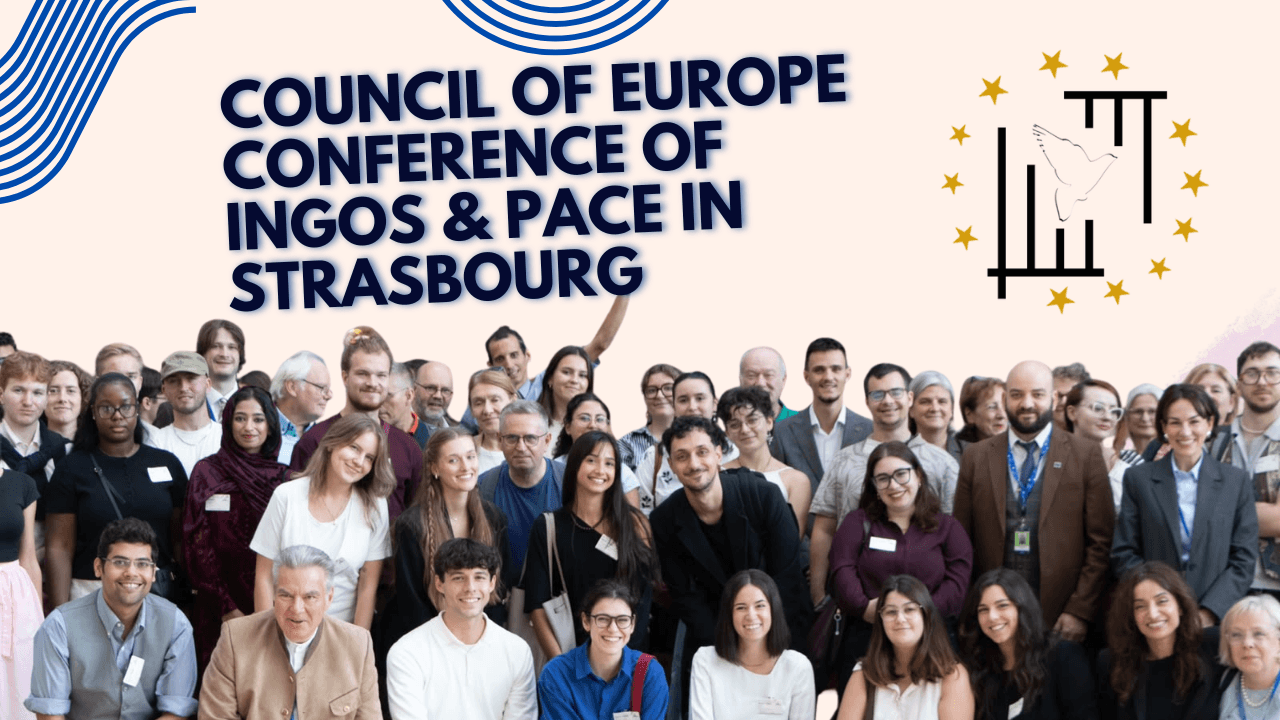
PACE Autumn Session: Key Discussions and Developments
From 28 September to 2 October, the Parliamentary Assembly of the Council of Europe (PACE) held its Autumn Session at the Palais de l’Europe in Strasbourg.
ASSEDEL was present throughout the session to monitor the debates and discussions taking place in plenary, gathering valuable insights into some of the most pressing human rights and rule-of-law issues currently facing Europe. Beyond its monitoring activities, ASSEDEL also had the opportunity to attend the ceremony for the Václav Havel Human Rights Prize, celebrating the work of individuals who have made an outstanding contribution to the defence of human rights.
The Autumn Session was marked by significant discussions on democratic backsliding, the repression of LGBTQI+ rights in Türkiye, and migration, particularly in the aftermath of the events in Ceuta in July.
The situations in Georgia and Russia were also prominent throughout the session. Georgia was urged to reverse its ongoing democratic decline and address concerns surrounding the country’s increasingly authoritarian trajectory, while Russia remained strongly condemned for its continued war of aggression against Ukraine and its persistent disregard for the principles underpinning the Council of Europe.
### The European Court of Human Rights and the independence of judicial decision-making
One of the most significant moments of the session was the address by Mattias Guyomar, President of the European Court of Human Rights, followed by an extensive exchange with members of the Assembly.
In his intervention, President Guyomar placed particular emphasis on the independence of the Court and on the importance of ensuring that States refrain from attempting to influence its judicial decision-making. He also addressed the implications of the Chișinău Declaration, making clear that, while the political context surrounding migration may be relevant to the broader European debate, the Declaration does not constitute a criterion that the Court should use when determining how it should adjudicate individual cases.
Türkiye featured prominently in his intervention. President Guyomar expressed concern over the growing number of civil servants being dismissed and the increasing restrictions on political pluralism. Particular attention was also devoted to the crackdown on LGBTQI+ activists and organisations, highlighting the broader challenges facing fundamental freedoms and democratic participation in the country.
The subsequent question-and-answer session provided an opportunity for Assembly members to explore not only the Court’s relationship with States, but also the broader question of how European institutions can work together to ensure the effective protection of human rights.
Among the issues raised was the implementation of the Court’s judgments and the potential for greater cooperation between the Council of Europe’s three statutory bodies (the Committee of Ministers, the Parliamentary Assembly and the Court) to strengthen compliance with judgments.
Migration was another important point of discussion. In particular, questions were raised about what the Chișinău Declaration reveals about European citizens’ attitudes towards migration and how political developments and public sentiment should be understood alongside the Court’s role in interpreting the European Convention on Human Rights.
The Court’s cases concerning Russia
The exchange also addressed the difficult situation of cases concerning Russia following its exclusion from the Council of Europe.
Ms Rian Vogels (Netherlands, ALDE) questioned President Guyomar on the Court’s decision to strike the remaining applications against Russia from its docket, highlighting the concerns this has generated among victims and observers. She pointed out that, even where enforcement of a judgment may appear unlikely, a judicial decision can still provide victims with recognition and preserve their confidence in European justice. She therefore asked whether realistic alternatives could have existed to preserve or defer these cases.
These questions highlighted a broader dilemma facing the European human rights system: how to preserve access to justice and the Court’s ability to provide recognition to victims even when the traditional mechanisms for enforcing judgments are severely constrained.
Overall, the Autumn Session offered a valuable insight into the challenges currently facing the European human rights architecture. From democratic regression and restrictions on fundamental freedoms to migration and the consequences of Russia’s exclusion from the Council of Europe, the discussions demonstrated the increasingly complex environment in which European human rights institutions operate — while also reaffirming the importance of maintaining an independent and effective European human rights system.
Defending civic space, social rights, and countering extremism: the Council of Europe Conference of INGOs in Strasbourg
While the Pace sessions were underway, the Council of Europe also hosted hosted the General Assembly of the Conference of International Non-Governmental Organizations (CINGO) in Strasbourg, a key event to take stock of democratic stability, the protection of human rights, and the role of civil society on the European continent. The meeting, opened by CINGO President Gerhard Ermischer, outlined a clear strategic path: from monitoring civic space to climate justice, including the European Social Charter and the response to growing political polarization.
Among the organizations present, ASSEDEL also had the privilege and opportunity of being invited to this session of the General Assembly, actively participating in the working days. In particular, the ASSEDEL communications team collaborated closely with CINGO, supporting the creation, curation, and use of multimedia content for the organization's official social media channels, thus consolidating a valuable synergy and strengthening the institutional partnership between the two entities.
Civic Space Under the Scrutiny: The Fifth Meeting of the Task Force
The fifth meeting of the Task Force on Civic Space Monitoring, a body that works closely with the authoritative Expert Council on NGO Law, opened the proceedings on September 28th. The Task Force reaffirmed its dual identity: on the one hand, serving as a focal point for gathering information and responding to ongoing attacks on rights and freedoms of association in Europe; on the other, a true think tank and "toolbox" for analyzing the structural pressures weighing on the third sector, from fiscal and administrative constraints to the phenomena of commodification and financialization of civil society.
The session provided a significant comparative and operational overview: for instance, we heard an in-depth analysis of the third sector's role in the Nordic countries (featuring contributions from Guri Idsø Viken of Frivillighet Norge and Christian Hellevang of the Norwegian Association of Local and Regional Authorities, KS) and of the concrete challenges facing the voluntary sector in Germany, as outlined by Martin Georgi (Deutscher Fundraising Verband). Subsequently, Pietro Barbieri, member of the EESC (European Economic and Social Committee), illustrated the aims and prospects of the new Civil Society Platform established by the European Commission to strengthen structured dialogue between EU institutions and civic organizations. Finally, Aarti Narsee (European Civic Forum) illustrated the methodological aspects of the annual report on civic space and the progress of the MACS project, while Harry Hummel (CURE Campaign) took stock of the follow-up to the Recommendation on the Shrinking of Civic Space adopted by the Conference in April 2025, relaunching the proposal for an Early Warning and Response Framework within the Council of Europe.
Completing the fieldwork, the Assembly discussed the findings of CINGO's fact-finding visits to Denmark and Montenegro on civil participation mechanisms, along with efforts to counter transnational repression and foreign information interference or manipulation (FIMI).
Dialogue with the “Other”: the screening of White Right: Meeting the Enemy and the debate with Deeyah Khan
The meeting with filmmaker and human rights activist Deeyah Khan centered on her award-winning investigative documentary “White Right: Meeting the Enemy” was also deeply moving and politically significant.
Born in Norway to a family of Pakistani heritage and having witnessed far-right violence firsthand since childhood, Khan chose to confront leaders and activists from the US white supremacist and neo-Nazi movements, including prominent alt-right figures like Richard Spencer and senior members of the National Socialist Movement, face-to-face in her film. Having also been on the front lines during the violent clashes at the "Unite the Right" rally in Charlottesville, the filmmaker did not stop at merely condemning the phenomenon; she sought to understand the psychological, emotional, and social roots that drive vulnerable or resentful individuals to embrace the dehumanization of others.
In discussions with CINGO delegates and the young participants in the plenary session, Khan's experience offered a valuable lesson for European civil society: hateful rhetoric and political polarization cannot be defused through indifference or censorship alone, but by unmasking the human frailties hidden behind extremist dogmas, without ever retreating from the firmness of democratic values.
Young Protagonists of Change: The Youth Session with Ece Ciftci and the New Traineeship Program
One of the most significant and central moments of the entire General Assembly was dedicated to the crucial role of the new generations, with the session "Review of annual youth activities and presentation of the upcoming calendar on youth related activities",coordinated with extraordinary energy and vision by Ece Ciftci.
During the meeting, Ciftci reviewed the key youth activities of the past year and outlined the schedule of future initiatives, highlighting the urgent need to provide young people with a voice, a platform, and a role in decision-making within European democratic processes. The most anticipated and significant announcement concerned the future prospect of integrating a structured Traineeship program within CINGO: a concrete opportunity designed to welcome and train young professionals, activists, and students, allowing them to immerse themselves directly in the advocacy, human rights, and institutional cooperation mechanisms of the Council of Europe.
Operational details, criteria, and application procedures for this traineeship program will be announced in due course via the association’s official platforms and channels.
Climate and Social Rights: Towards COP31 and Strengthening the European Social Charter
Among the programmatic priorities, the climate emergency has emerged forcefully. In the strategic session entitled "Living with climate risk in Europe", CINGO addressed the impact of environmental change by combining prevention, public health and human rights, adopting targeted recommendations in view of COP31.
To round off the week, a hybrid training day co-sponsored with the European Committee of Social Rights (ECSR) provided civil society representatives with practical tools to influence the implementation of the European Social Charter. Led by ECSR leadership, the training explored both national reporting procedures and the collective complaints mechanism.
Acknowledgements and Outlook
Participation in this CINGO GA session represented a moment of growth, discussion, and consolidation for ASSEDEL on the international stage. The association would like to express its deepest and most sincere gratitude to the President of the INGO Conference, Gerhard Ermischer, and the coordinator of youth activities, Ece Ciftci.
It is thanks to their openness, trust, and inclusive vision that ASSEDEL was able to actively participate in these days and make its contribution, confirming the importance of networking for the protection of democratic space in Europe.
ASSEDEL (2026). All rights reserved.