

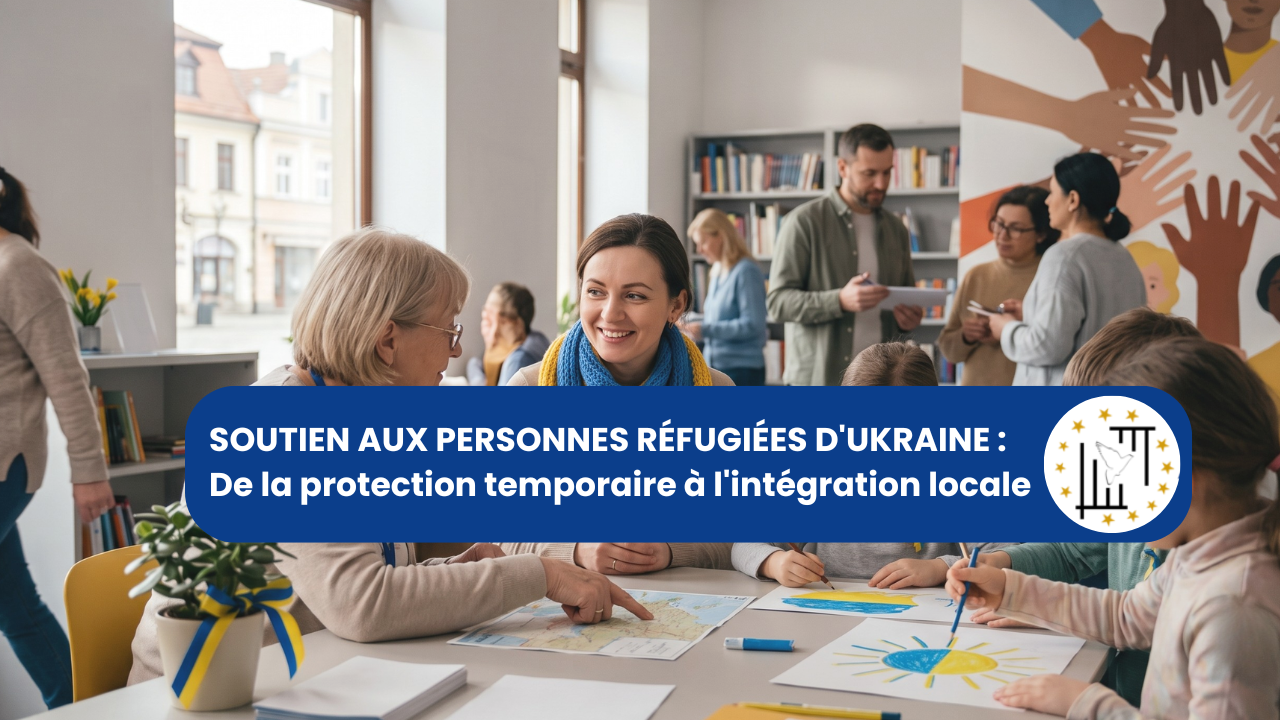
Quatre ans après le déclenchement de la guerre, des millions de personnes en provenance d'Ukraine demeurent en situation de déplacement à travers l'Europe. En avril 2026, environ 4,4 millions de ressortissants de pays tiers (majoritairement des personnes ukrainiennes) bénéficiaient du mécanisme de protection temporaire de l'Union européenne, tandis que quelque 6,8 millions d'Ukrainiens se trouvaient déplacés à l'étranger. Initialement gérée sous le prisme de l'urgence humanitaire, l'approche stratégique s'est désormais réorientée vers des politiques d'intégration à plus long terme. Les pouvoirs locaux et régionaux font aujourd'hui face à une pression constante sur les infrastructures de logement, les systèmes éducatifs et de santé, le marché de l'emploi ainsi que les services sociaux, tout en se préparant à l'éventuelle transition vers un statut de résident pérenne ou au retour des personnes exilées. Les données émanant de sources officielles mettent en exergue une volonté toujours forte de retour dans le pays d'origine (si l'évolution du conflit le permet) ; toutefois, des obstacles persistants – au premier rang desquels la destruction des logements, les difficultés d'accès à l'emploi et les impératifs de sécurité – freinent ces retours. Le déploiement d'initiatives locales (telles que les « pôles d'intégration », les services multilingues et les réseaux de bénévoles), conjugué à une gouvernance et une coopération multiniveaux, a produit des effets bénéfiques. Néanmoins, des défis majeurs subsistent : une capacité d'accueil inégale, une pression budgétaire accrue sur les municipalités, ainsi que des risques d'exclusion sociale, tout particulièrement pour les groupes en situation de vulnérabilité. Afin d'y remédier, il est recommandé de maintenir une coordination étroite des régimes de protection temporaire, de faciliter la transition vers des titres de séjour ordinaires, de renforcer les financements alloués aux collectivités territoriales (notamment par le biais de fonds européens et nationaux fléchés), et de déployer à plus grande échelle les pratiques locales ayant fait leurs preuves (par exemple, les centres d'intégration communautaire). La protection des droits fondamentaux et le renforcement de la cohésion sociale – par l'adoption de mesures de lutte contre les discriminations, la mise en place d'un accompagnement tenant compte des traumatismes et une communication publique adéquate – constituent un impératif. La présente note de synthèse s'appuie sur de récentes analyses menées par l'UE, le HCR, l'OCDE, la FRA et le Conseil de l'Europe, et met en lumière des études de cas illustratives (dûment référencées) destinées à orienter l'action publique.
Les déplacements de populations engendrés par la guerre revêtent toujours un caractère inédit : l'Europe fait face à l'afflux de personnes réfugiées le plus massif depuis la Seconde Guerre mondiale (OCDE, 2026). Au début de l'année 2026, 4,4 millions de personnes réfugiées d'Ukraine bénéficiaient du régime de protection temporaire (PT) au sein de l'UE (auxquels s'ajoutent des flux migratoires significatifs vers des pays non membres de l'UE). L'Allemagne (≈1,28 M), la Pologne (≈0,97 M) et la Tchéquie (≈0,38 M) accueillent à elles seules la majorité de ces personnes. Le statut de protection temporaire a fait l'objet d'une prorogation (actuellement jusqu'au 4 mars 2027, avec des propositions à l'étude pour une reconduction jusqu'en 2028). Près de 4,5 millions de personnes étaient couvertes par ce dispositif à la fin de l'année 2025. Le taux de reconnaissance des demandes d'asile ukrainiennes s'avère élevé dans certains pays (environ 90 % en Estonie et en France, par exemple) mais demeure faible dans d'autres (3 % en Allemagne en 2025), traduisant ainsi l'évolution des orientations politiques. Les enquêtes mettent en lumière des intentions partagées : environ un tiers des personnes souhaitent retourner en Ukraine, un tiers préfèrent s'établir dans le pays d'accueil et un quart demeurent indécises. Si la majorité envisageait de rentrer à terme, la persistance du conflit armé entrave toute perspective de retour à court terme.
Reception capacity and public services vary widely. Many refugees rely on private accommodation (60% in FRA survey), often at cost and overcrowded (shared kitchens/bathrooms, lack of study space for children). Municipalities face housing shortages: rents and home prices have surged in key cities (e.g. Vilnius saw +24% price rise in early 2022). In some places (e.g. Prague in May 2022), makeshift camps were opened due to acute demand. Education uptake lags: <50% of school-age children continued education in the host country, largely due to language barriers. Labour-market absorption is uneven: about two-thirds of pre-war workers found jobs, but overall two-thirds of working-age refugees remained unemployed, hindered by language, childcare, and recognition issues. Psychosocial distress is high – ~50% of adults often feel depressed and nearly all experienced war-related trauma – straining health and social support systems.
Cliquez ici pour consulter le rapport dans son intégralité.