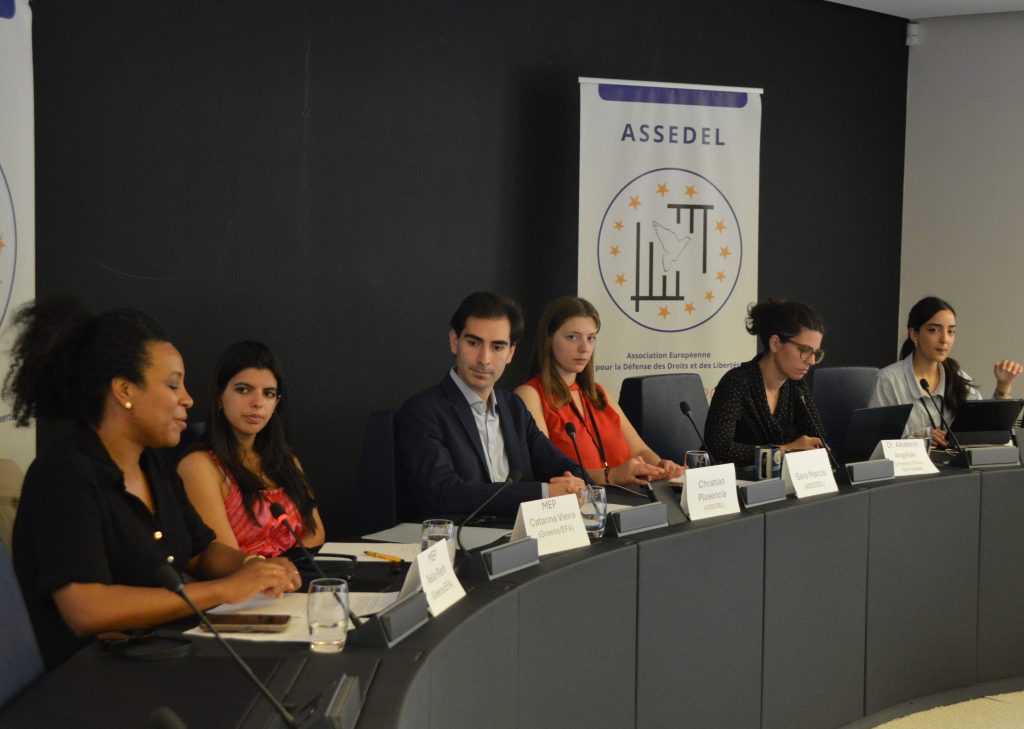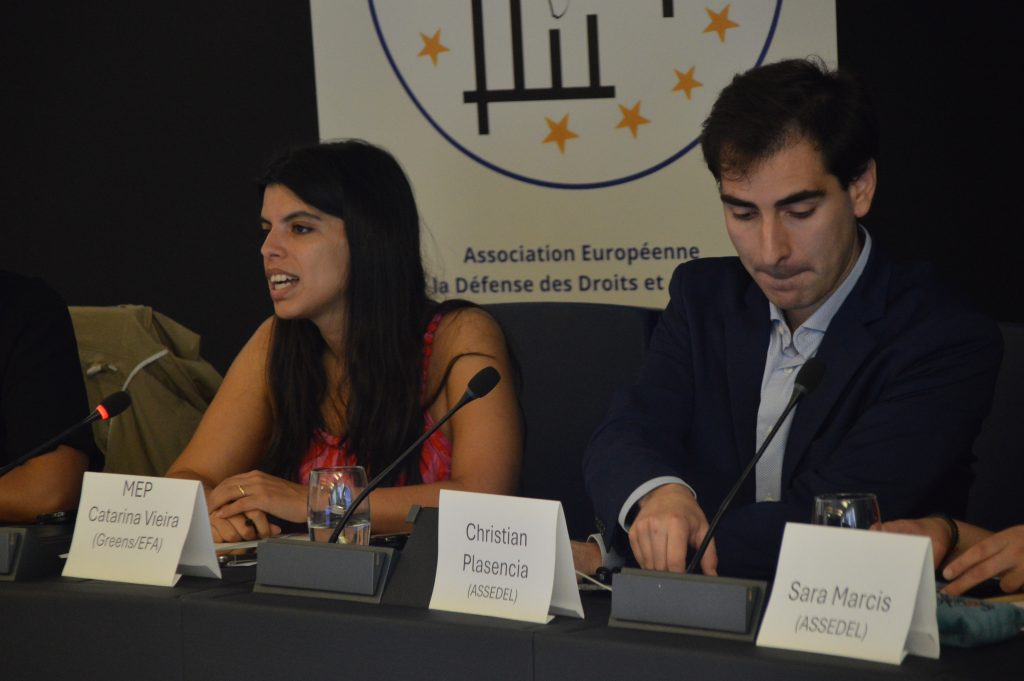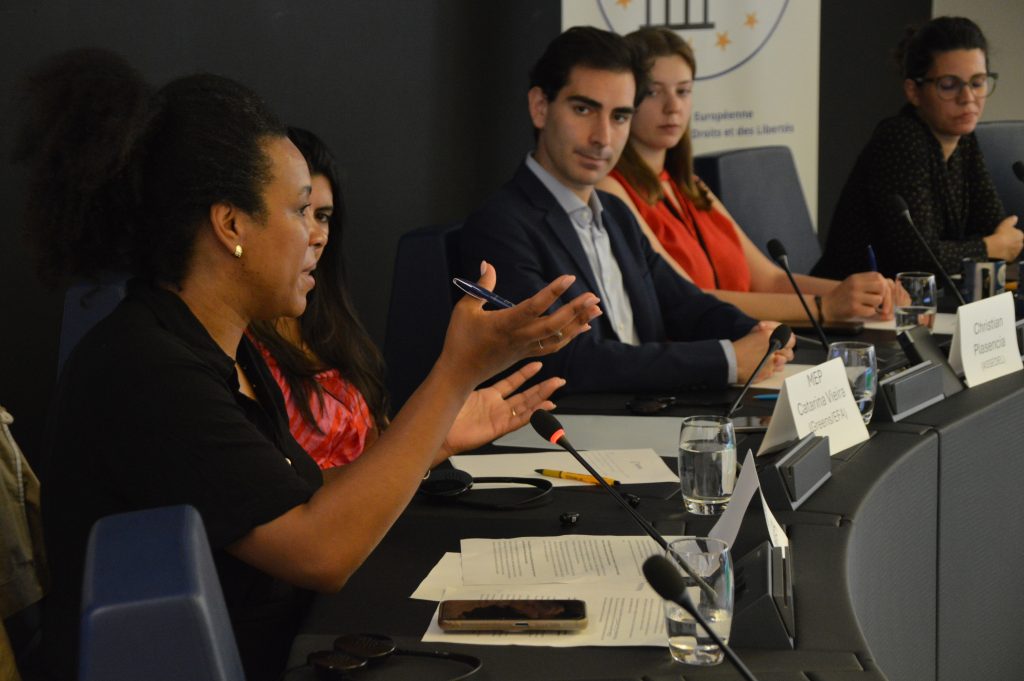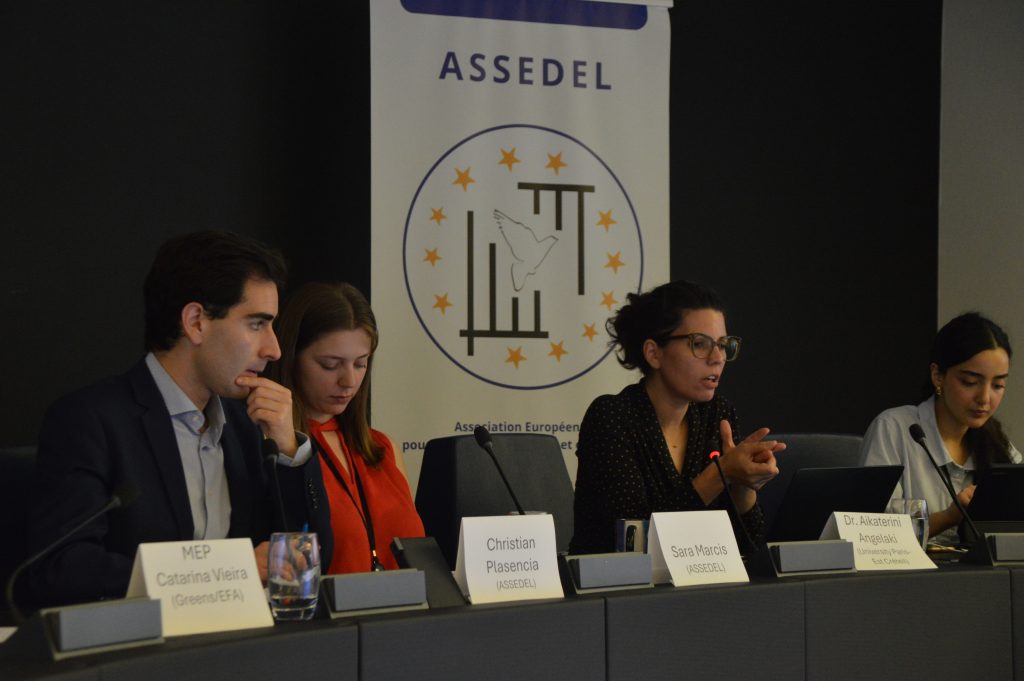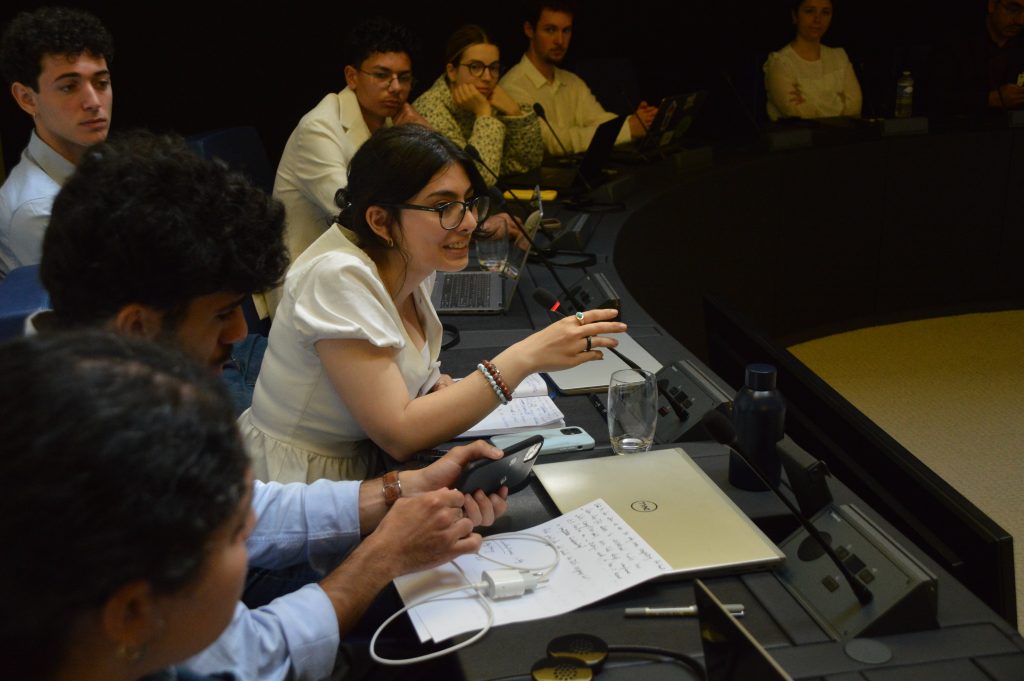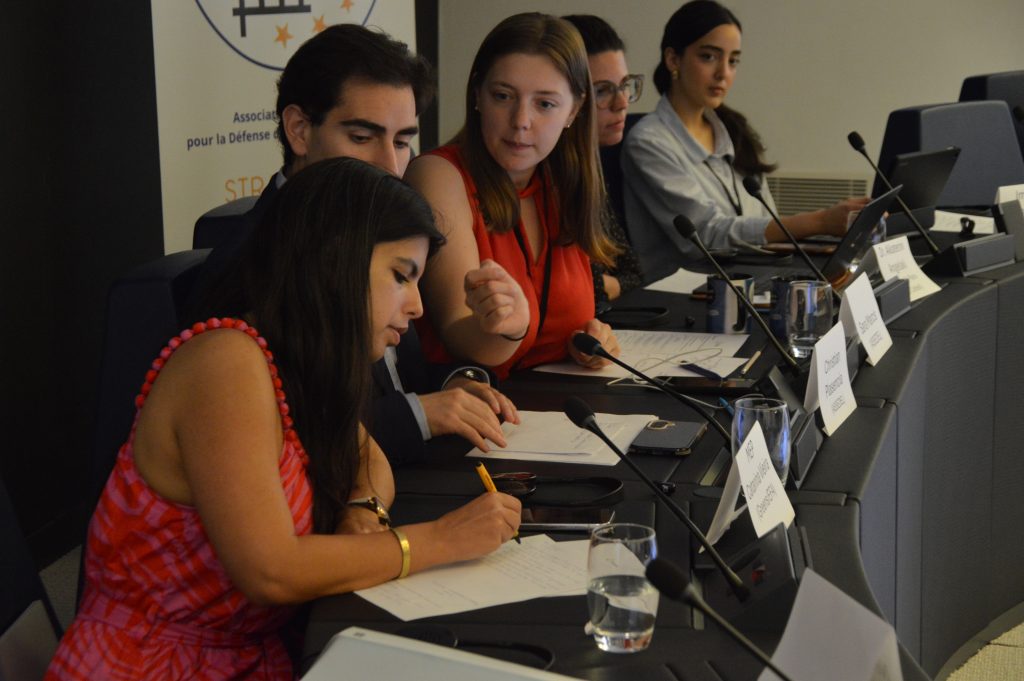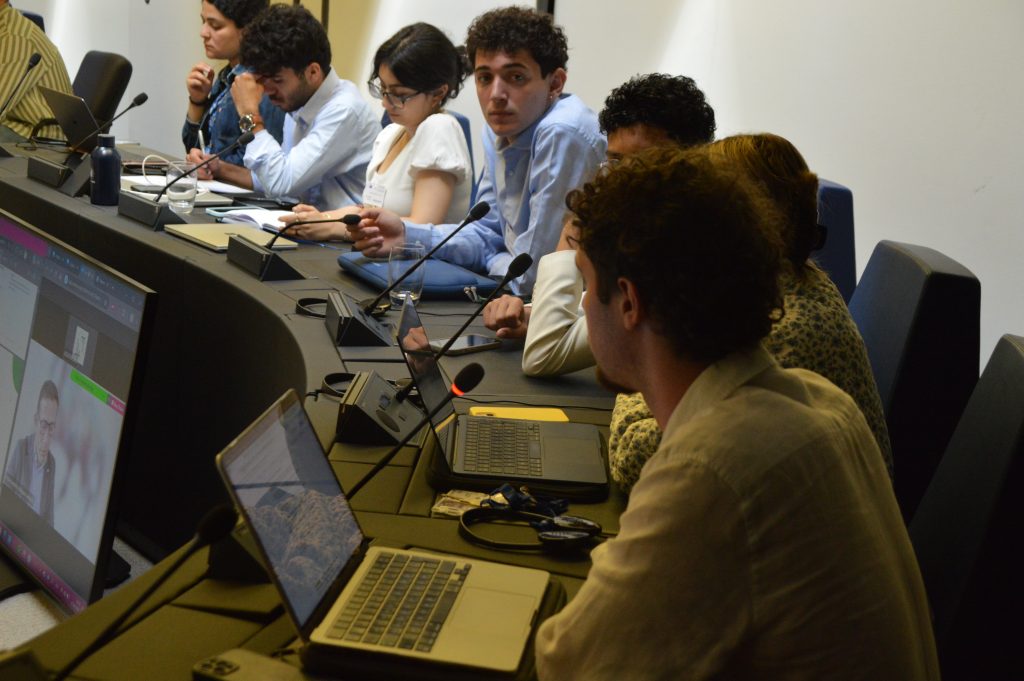
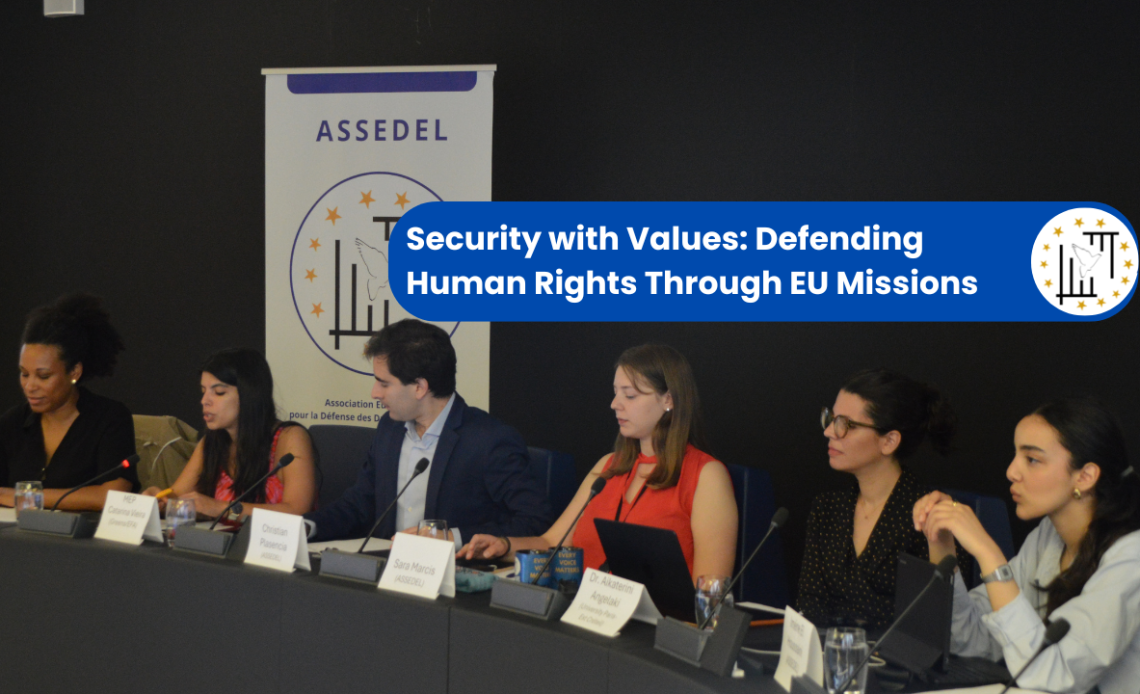
We are proud to share that ASSEDEL’s panel discussion, Security with Values: Defending Human Rights Through EU Missions, took place on Wednesday, June 17, at the European Parliament in Strasbourg. The event was co-hosted by MEP Catarina Vieira (Greens/EFA), member of the Subcommittee on Human Rights (DROI).
The purpose of the event was to explore how the European Union can shape a sustainable security framework in which human rights constitute one of its fundamental pillars. Bringing together speakers from diverse backgrounds, the panel offered different perspectives on the relationship between security and human rights.
This edition featured MEP Nela Riehl, Chair of the Committee on Culture and Education (CULT) and member of the Committee on Foreign Affairs (AFET), alongside Dr. Aikaterini Angelaki and Dr. David Rodriguez.
A Holistic Vision of Security: MEP Nela Riehl
MEP Nela Riehl stressed that a holistic understanding of security is essential. According to her, security cannot be separated from the root causes of conflict, including the erosion of human rights and inequality. Asked about the role the EU should play in promoting security, stability, and cooperation around the world, MEP Riehl argued that structural changes are needed. While there is a tendency to view the EU as a natural defender of multilateralism, she emphasized that institutions must adapt to a rapidly changing world.
Emerging conflicts and international disputes increasingly benefit major powers that have adopted more assertive foreign policies. Meanwhile, the EU’s dependence on strategic resources limits its room for manoeuvre and constrains the development of a more independent foreign policy.
In response, she highlighted the need for greater European autonomy in areas such as energy and technology. She also underlined the importance of strengthening cooperation with countries of the Global South and exploring partnerships with emerging regions. For MEP Riehl, multilateralism and cooperation remain defining features of the European project, and isolation cannot be considered an alternative.
Regarding the role of education, MEP Riehl warned against the growing manipulation of information. She argued that students should be equipped with the tools necessary to critically assess information independently.
Describing media literacy as a “civic survival skill,” she stressed that European societies currently lack these competencies. She also pointed to the challenges posed by artificial intelligence and the need to prepare educational systems accordingly.
As she concluded: “We need to close the gap between what Europe does and what people understand and see what it does.”
Judicial Protection in CSDP Missions: Dr. Aikaterini Angelaki
The discussion then turned to the legal dimension of EU Common Security and Defence Policy (CSDP) missions. Dr. Aikaterini Angelaki identified attribution of responsibility as the first major challenge. Since CSDP missions involve multiple actors and rely on member states rather than a supranational European army, determining the appropriate defendant is often difficult. A mistake in identifying responsibility may result in a case failing before reaching the merits.
A second challenge concerns the fragmentation of available remedies. Access to EU courts remains uncertain and demanding, while national courts follow differing approaches. Dr. Angelaki cited the Tumonuvic case against the EU as an example of these complexities. Although the European Court of Human Rights provides another avenue for redress, applicants must first exhaust all domestic remedies.
The final challenge concerns effective redress. Dr. Angelaki highlighted the absence of guaranteed financial compensation mechanisms, which limits accountability in practice. She concluded her intervention by emphasizing: “If CSDP missions are meant to promote the rule of law externally, effective judicial protection must be part of their credibility.”
Human Rights and the Evolution of EU Security: Dr. David Rodriguez
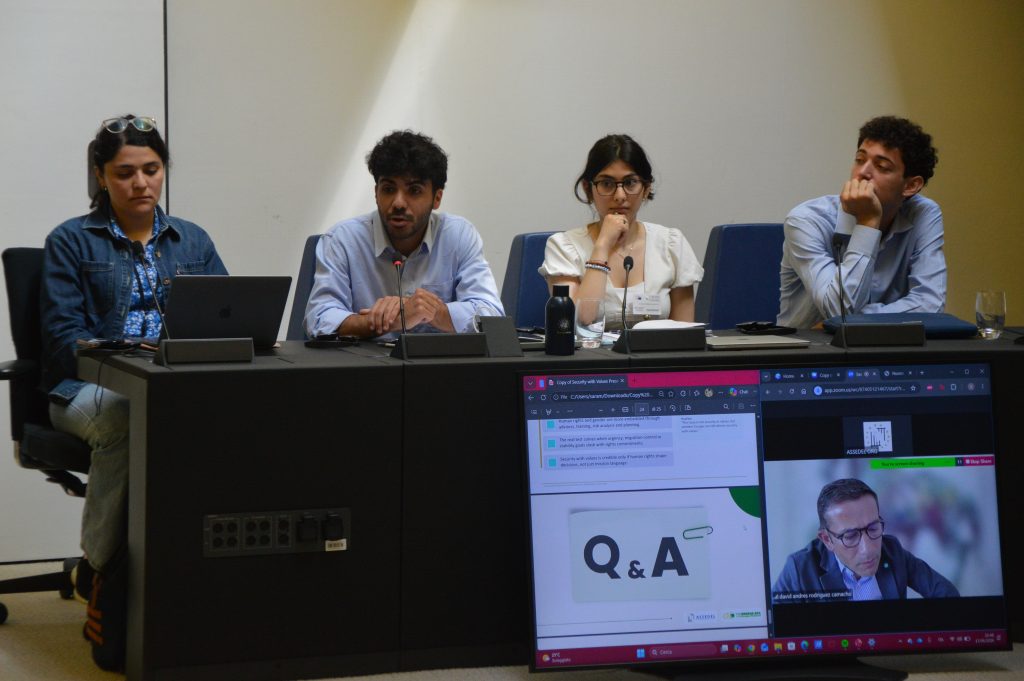
The final speaker, Dr. David Rodriguez, Professor at the University of Deusto and former member of the Colombian Army, focused on the evolution of EU security and the integration of human rights into the Union’s security agenda.
Dr. Rodriguez explained that security is not a static concept but rather a social construction whose priorities evolve over time. According to him: “EU security has become broader, harder, and more geopolitical.”
This transformation is reflected in successive strategic documents, from the European Security Strategy (2003) to the Global Strategy (2016) and the Strategic Compass (2022). Each represents a further adaptation to new challenges and priorities.
Drawing on the experience of past missions, Dr. Rodriguez emphasized the importance of realistic mandates and local legitimacy. In his view, the EU must support local authorities without replacing them. Otherwise, external assistance risks creating dependence rather than sustainable development. As he put it: “Without local ownership, capacity-building can become dependency-building.”
Dr. Rodriguez argued that the European Union occupies a unique position in the international system. However, defending human rights in a geopolitical context characterized by hybrid warfare and increasing violence remains a major challenge.
Despite these difficulties, he maintained that integrating human rights into the security agenda remains possible. At the same time, the EU must continue to defend itself while preserving the values that are constantly challenged by external threats.
Conclusion
The panel highlighted the need for a broader understanding of security, one that addresses structural causes of conflict, ensures effective judicial protection, and maintains the centrality of human rights in the EU’s external action.
As geopolitical tensions continue to reshape the international landscape, the discussions demonstrated that safeguarding European security and defending human rights should not be viewed as competing objectives, but as mutually reinforcing pillars of the European project.