

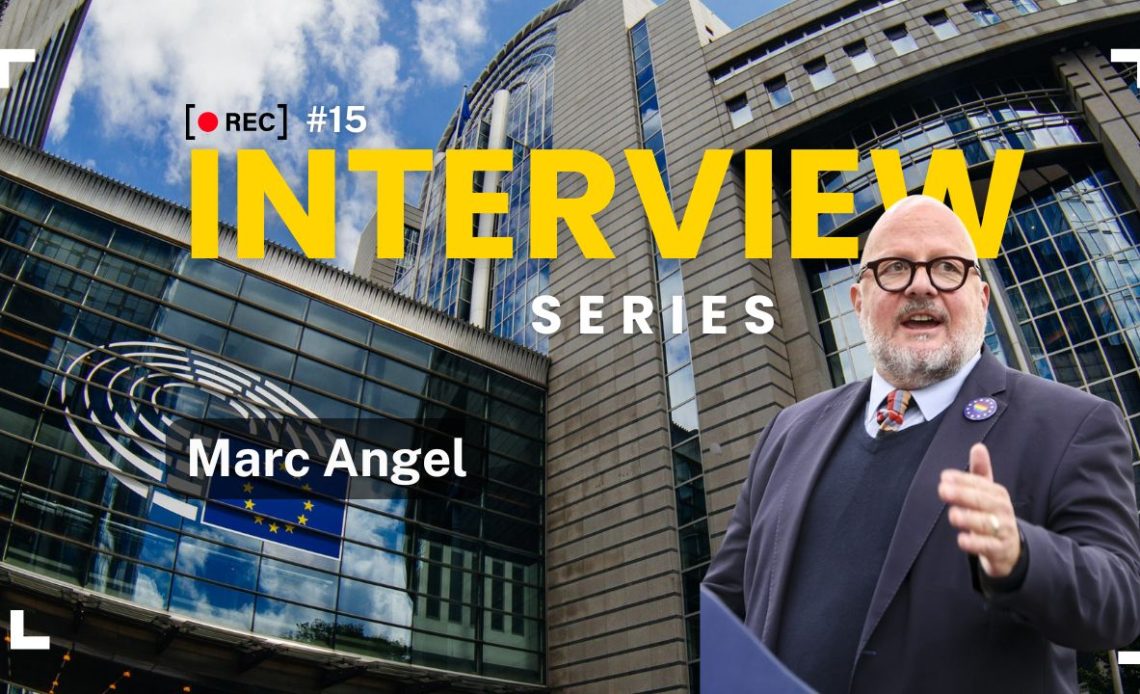
ASSEDEL spoke with Marc Angel, Member of the European Parliament and co-chair of the LGBTQ+ Intergroup, about the current state of LGBTQ+ rights in the European Union, the rise of anti-gender movements, and the political challenges shaping equality policies across Europe.
Angel began by explaining the work of the LGBTQ+ Intergroup, one of the largest cross-party groups in the European Parliament, bringing together over 120 MEPs from pro-European and democratic political families. The Intergroup plays a key role in monitoring the situation of LGBTQ+ people across member states, shaping parliamentary resolutions, and maintaining close cooperation with European and national civil society organisations.
Its work spans both legislative influence and on-the-ground engagement. From collaborating with the European Commission on the LGBTQ+ Equality Strategy to supporting civil society in cases such as discrimination in Poland or legal recognition issues for same-sex families, the Intergroup acts as a bridge between institutions and citizens. According to Angel, this connection is essential to ensure that European policies reflect lived realities.
Rising challenges and targeted communities
While progress has been made in recent years, Angel stressed that LGBTQ+ rights are increasingly facing backlash. He pointed in particular to the growing vulnerability of trans and intersex people, who remain the most targeted groups within the community.
Recent efforts have focused on advancing protections, including support for the European Citizens’ Initiative to ban conversion practices, which gathered over 1.2 million signatures. For Angel, this demonstrates both the urgency of the issue and the capacity of European citizens to mobilise in defence of fundamental rights.
At the same time, he emphasised that the fight for LGBTQ+ equality is not about granting additional rights, but ensuring equal treatment and protection from discrimination. “There is no ‘gender ideology’,” he argued, “only a human rights agenda.”
The anti-gender movement and disinformation
A central theme of the interview was the rise of the so-called anti-gender movement, which Angel described as a transnational and increasingly organised network. According to him, this movement spreads disinformation by framing gender equality and LGBTQ+ rights as threats to traditional family values or children’s wellbeing.
He strongly rejected these claims, highlighting the importance of comprehensive education in fostering inclusion and protecting young people. Lack of information, he warned, can have severe consequences, particularly for LGBTQ+ youth who may face isolation, stigma, or mental health risks.
Angel also pointed to the international dimension of this movement, noting its connections with political actors and organisations beyond the EU, and its growing influence in regions such as Africa. This, he argued, makes coordinated responses at both European and national levels more necessary than ever.
Political tensions within the European Parliament
The current parliamentary term presents additional challenges. Angel noted the increased presence of far-right groups, which have amplified anti-gender narratives and, in some cases, normalised discriminatory discourse within institutional debates.
This shift has made negotiations more difficult and, at times, more confrontational. Nevertheless, he underlined that a pro-European and pro-equality majority remains in place, committed to defending fundamental rights and democratic values.
For Angel, the link between equality and democracy is clear: protecting LGBTQ+ rights and women’s rights is essential to safeguarding the foundations of the European Union itself.
Towards a Union of equality
Despite the challenges, Angel remains optimistic. He stressed the importance of continuing to build alliances—both within institutions and with civil society—to counter disinformation and advance equality policies.
His message is ultimately one of resilience: while hate and division may be gaining visibility, they do not represent the core values of the European project. “Equality,” he concluded, “is not optional—it is at the heart of our democracy.”
ASSEDEL, based in Strasbourg and committed to the promotion of human rights and European values, continues to follow and highlight the political and social debates shaping the future of equality in Europe.
Watch the full interview on our YouTube channel!