 ASSEDEL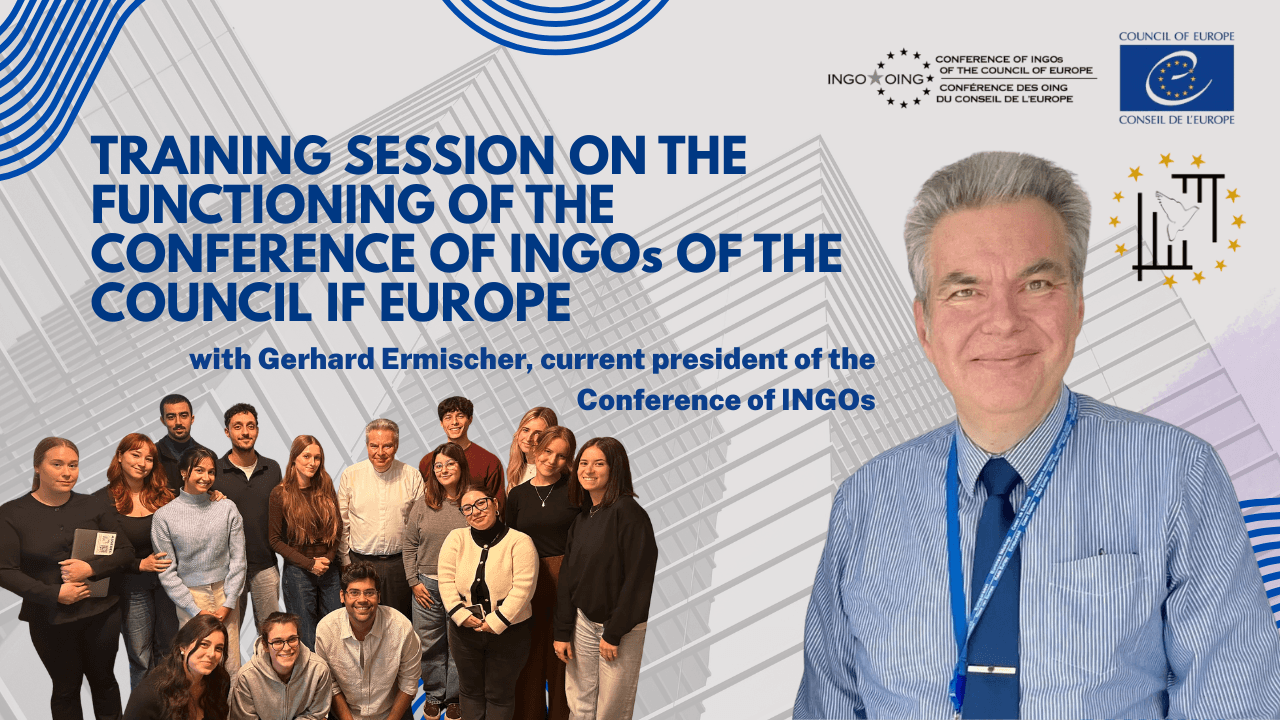
On October 2026, ASSEDEL organised an enriching training session with Gerhard Ermischer, current president of the Conference of INGOs. During the session, an in-depth analysis was carried out of the role of the Council of Europe (CoE), the importance of its conventions and the fundamental impact of the Conference of International Non-Governmental Organisations (CINGO) on the defence of human rights.
The power of the Council of Europe’s conventions
The session began by highlighting that the European Convention on Human Rights is the only one of the Council of Europe’s more than 30 conventions to which all member states are obliged to adhere. These conventions represent the CoE’s most significant legal instruments, as they provide citizens with a means of holding their countries to account, primarily by exercising ‘moral authority’ to press for their implementation.
Ermischer explained that, thanks to the shared policies between the European Union (EU) and the Council of Europe (CoE), when the EU accedes to these conventions it gains the power to impose punitive measures on countries that breach them. This may take the form of withholding funds or imposing sanctions, in direct accordance with the rulings of the European Court of Human Rights.
On the political front, there was discussion of how the Parliamentary Assembly of the Council of Europe (PACE) has gone so far as to deny accreditation to parliamentarians from certain countries when they fail to meet the CoE’s minimum standards. However, the Committee of Ministers is exerting pressure for these accreditations to be reinstated, with the strategic aim of preventing further nations from leaving the organisation.
The role of the Conference of INGOs
The key part of this training session focused on the Conference of INGOs, which weattended from the 28th September to the 2nd October. This body represents civil society organisations that hold consultative status with the Council of Europe. Although its participants do not have the right to vote, they have invaluable access to privileged information and enjoy the same right to speak as member states (unlike mere observers, who must wait until everyone else has finished speaking).
CINGO wields considerable influence through its membership of the Bureau and of theworking and drafting groups. It is within these forums that the real work takes place and where one can influence the outcome of proceedings. Beyond its usual lines of action, CINGO carries out visits to various countries to engage in direct dialogue with their leaders, produces on-the-ground situation reports and works side by side with other NGOs to support specific causes.
Ermischer made a clear appeal regarding the current state of the system: “We need a reactive mechanism, we already have plenty of warning mechanisms and alert reports”.
From ASSEDEL, we would like to express our sincere thanks to Gerhard Ermischer for his time, his willingness to help and for sharing his valuable knowledge with us during this enlightening training session. His in-depth insight into the workings of the Council of Europe and the importance of civil society is of vital importance in strengthening our day-to-day commitment to the defence of human rights and democratic values.