

C'est palpable. Ce sentiment d'épuisement va bien au-delà des récentes vagues de chaleur. C'est plutôt une profonde désillusion quant à l'efficacité de la participation démocratique qui persiste depuis très longtemps dans l'esprit des jeunes adultes.
La faible participation électorale et l’indifférence envers la politique ne sont que les symptômes d’un sentiment plus général : on a souvent l’impression que les jeunes s’en moquent tout simplement. Mais est-ce là toute la vérité ? Sont-ils véritablement désintéressés ? Ou ont-ils simplement perdu confiance dans les représentants et les institutions dont l’objectif premier est de préserver leur bien-être ? Alors que les crises du logement et du coût de la vie semblent inéluctables et que les progrès en matière de droits sociaux ont marqué le pas, comment pouvons-nous espérer qu’ils continuent à soutenir un système qui leur donne l’impression de les laisser tomber ?
At the core of this disruptive mindset lies a systemic issue: the perceived distance between young people and governing institutions. It is no accident that the European Union is frequently described as a “bubble”: all-encompassing for those inside, yet entirely out of reach for those on the outside.
Mais la démocratie, c'est comme un muscle qu'il faut exercer quotidiennement, et pas seulement en votant tous les quelques années. La montée actuelle de l'apathie et de la frustration politiques doit nous servir de signal d'alarme urgent. Nous devons changer la donne et montrer aux jeunes adultes que leur opinion compte, qu'ils sont écoutés et qu'ils peuvent jouer un rôle actif dans l'avenir de leur communauté.
Heureusement, il existe des moyens de combler le fossé entre la vie quotidienne et les hautes sphères du pouvoir politique. Et c'est précisément là que les ONG entrent en jeu.
Au-delà des mots à la mode : le nouveau pacte démocratique
While “youth participation” is a popular buzzword, in practice, it rarely amounts to more than passive listening. Young people routinely feel overlooked and locked out of political institutions. Generation Z faces unprecedented challenges: skyrocketing living costs and a daunting job market have fueled profound frustration.
Les conséquences de cette négligence sont déjà visibles. Lors des dernières élections européennes, le taux de participation a baissé de 6 % chez les 15-25 ans et de 1 % chez les 25-39 ans. Ce ressentiment croissant est activement exploité par les forces populistes à travers l’Europe, qui ciblent précisément cette tranche d’âge. Pour y remédier, nous devons aller au-delà des gestes symboliques ; nous devons agir pour offrir de réelles opportunités et, surtout, nous devons écouter pour comprendre.
Le Nouveau pacte démocratique du Conseil de l'Europe constitue une initiative essentielle pour relier ces différents éléments, dans le but de bâtir une démocratie plus résiliente et plus solide. Son succès repose toutefois sur la société civile : les ONG sont les yeux et les oreilles des institutions politiques. L'autonomisation des jeunes doit être considérée comme une nécessité démocratique, car ils constituent le fondement même de notre avenir.
Combler le fossé: les ONG en action
En tant qu'ONG, nous assumons pleinement notre responsabilité sociale unique, qui consiste à servir de relais essentiels entre les instances dirigeantes et le public. En nous concentrant tout particulièrement sur l'action en faveur de la jeunesse, nous avons pour objectif, chez ASSEDEL, de mettre en lumière les défis auxquels les jeunes sont confrontés et d'éliminer les obstacles qui les empêchent d'accéder à ces institutions.
Pour établir un véritable lien avec la jeune génération, les ONG doivent trouver des moyens innovants et efficaces de les impliquer, en créant des espaces où ils peuvent librement partager leurs doutes et leurs idées. L'ASSEDEL a déjà commencé à prendre des mesures concrètes pour rapprocher les jeunes des institutions européennes.
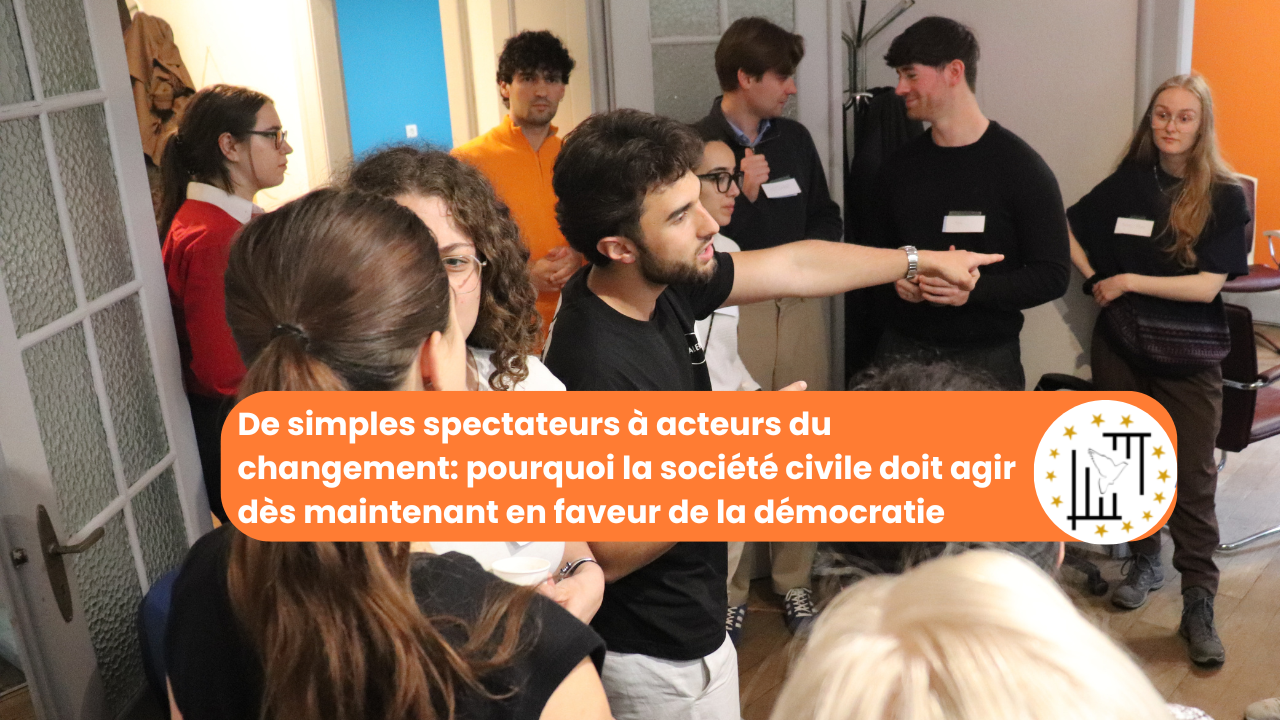
On May 10th, ASSEDEL opened its doors to 20 students from across Europe for an “Open Library” event. By inviting officials from the Council of Europe’s communication and legal departments, we gave participants a firsthand look at the inner workings of these institutions. They learned about the decision-making processes that ultimately shape their daily lives. It was a simple yet profound experience that demystified the mechanisms of democracy.
De simples spectateurs à acteurs du changement
Que ce soit dans les grandes salles du Parlement européen ou au sein du conseil municipal local, les jeunes méritent d'avoir leur mot à dire : ils doivent devenir les artisans de leur propre avenir et ainsi être en mesure de façonner la société dont ils ont hérité.
In this sense, NGOs have the unique power to hand over the keys. By organizing dynamic discussion groups, interactive workshops, and grassroots “Democracy Cafés,” civil society can transform political frustration into civic fuel. It is time to move young people from the sidelines to the center stage, turning everyday bystanders into the very builders of tomorrow’s democracy.