

Comprendre la participation et l'expression publique
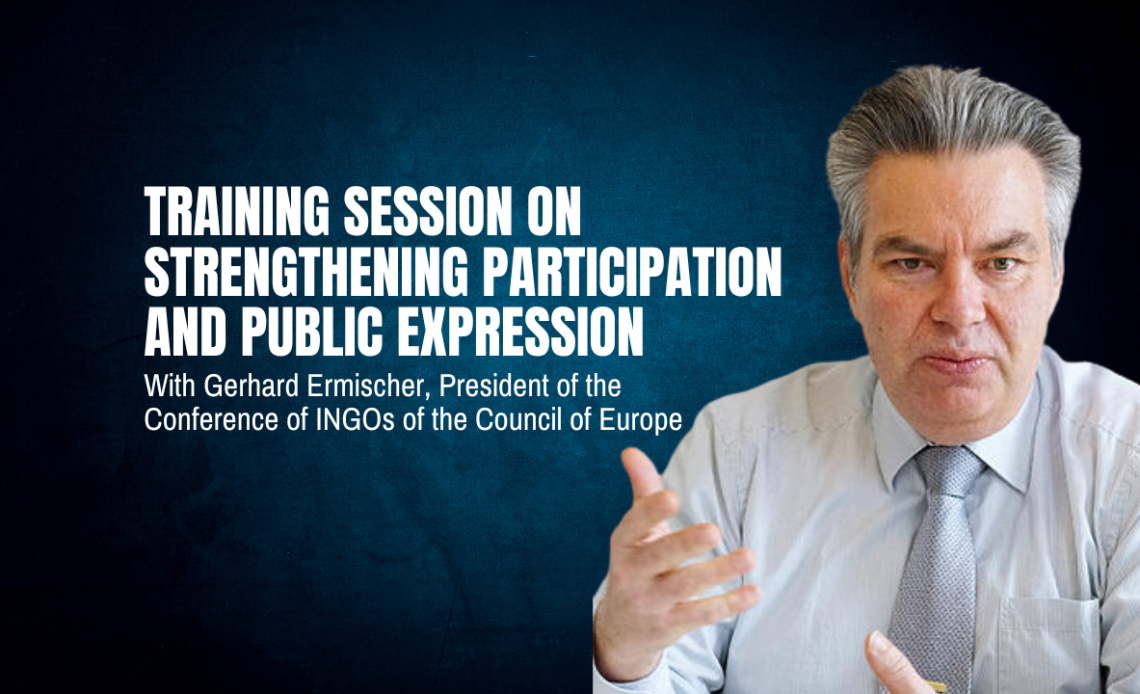
ASSEDEL a récemment eu l'occasion de participer à une session de formation animée par Gerhard Ermischer, président de la Conférence des OING du Conseil de l'Europe. Fort de plus de 25 ans d'expérience au sein du Conseil de l'Europe, M. Ermischer a apporté un éclairage précieux sur les relations entre les institutions et la société civile, le rôle des conventions et l'importance d'une participation inclusive aux processus démocratiques.
Il a souligné que l'expression publique, en particulier lorsqu'elle est bruyante ou chargée d'émotion, est souvent interprétée à tort comme déraisonnable. Ce malentendu peut décourager tout dialogue constructif. C'est pourquoi le Conseil de l'Europe a élaboré ses conventions, afin de donner aux citoyens les moyens d'agir, de leur fournir les outils nécessaires pour comprendre les questions qui les concernent et de les encourager à exprimer clairement leurs préoccupations. Les facilitateurs jouent un rôle crucial en aidant les individus à reconnaître ce qui compte vraiment pour eux et à le communiquer efficacement.
Des cadres d'action aux mesures concrètes dans les conventions du Conseil de l'Europe
M. Ermischer a souligné que, dans les ateliers liés à la Convention européenne du paysage, les discussions portaient souvent sur la manière de transformer le cadre de la Convention en actions concrètes. Une fois qu'un pays signe une convention, celle-ci fait partie intégrante de son cadre juridique national. Cependant, contrairement à l'Union européenne qui prend ces engagements très au sérieux, le Conseil de l'Europe n'a pas le pouvoir de faire respecter ses textes. Néanmoins, la force de la mise en œuvre dépend de l'existence ou non de mécanismes de contrôle. Certaines conventions prévoient des systèmes de suivi solides, tandis que d'autres rencontrent des difficultés dans ce domaine.
Fonctionnement de la Conférence des OING
Il a également présenté un aperçu de la Conference of INGOs, qui regroupe plus de 300 organisations internationales ayant un statut participatif. Il a expliqué les critères requis pour obtenir ce statut, les procédures d'évaluation qui s'ensuivent et les efforts continus visant à simplifier et à améliorer les processus administratifs. Les ONG participantes contribuent aux groupes thématiques, aux missions d'enquête et aux visites dans les pays, apportant ainsi des perspectives de première main provenant du terrain.
La session a également abordé les défis plus larges auxquels la société civile est confrontée aujourd'hui. Les réseaux sociaux ont fragmenté le débat public, créant des bulles linguistiques, culturelles, sociales et politiques fortement polarisées qui rendent la communication plus difficile. La conférence cherche à contrer cette tendance en encourageant une participation diversifiée et en veillant à ce que les voix d'organisations de tailles, de missions et d'horizons différents soient prises en compte.
Engagement sur le terrain et défis structurels
Grâce à ses visites et à ses échanges avec des organisations locales, la Conférence des OING recueille des informations essentielles sur les réalités locales. M. Ermischer a donné des exemples d'ONG qui fournissent des services vitaux, révèlent des difficultés structurelles, mais sont confrontées à la désinformation malgré leurs contributions.
Il a rappelé aux participants que le Conseil de l'Europe s'appuie sur son soft power et son autorité morale. Il ne peut contraindre les États membres à agir, mais les OING bénéficient d'un accès privilégié à l'information et peuvent influencer les processus de travail grâce à leur participation.
Responsabilité collective et rôle de la société civile
Enfin, M. Ermischer a souligné que la société civile doit agir de manière plus collective et sortir de ses propres cadres. La cohésion est essentielle, car les atteintes aux droits dans un domaine finissent par toucher tout le monde. Chaque organisation a tendance à se concentrer sur ses propres préoccupations, mais une solidarité plus large est nécessaire. Si nous ne défendons que nos propres intérêts, nous perdons nos alliés et notre force collective. Les menaces qui pèsent sur les droits dans un domaine finissent par toucher tous les autres. La solidarité collective est essentielle, car la défense des droits nécessite une responsabilité partagée et une coopération.
L'ASSEDEL remercie chaleureusement M. Ermischer pour cette session riche en enseignements et en inspiration,ce qui a renforcé l'importance d'un engagement actif, éclairé et collaboratif de l'ensemble de la société civile.