

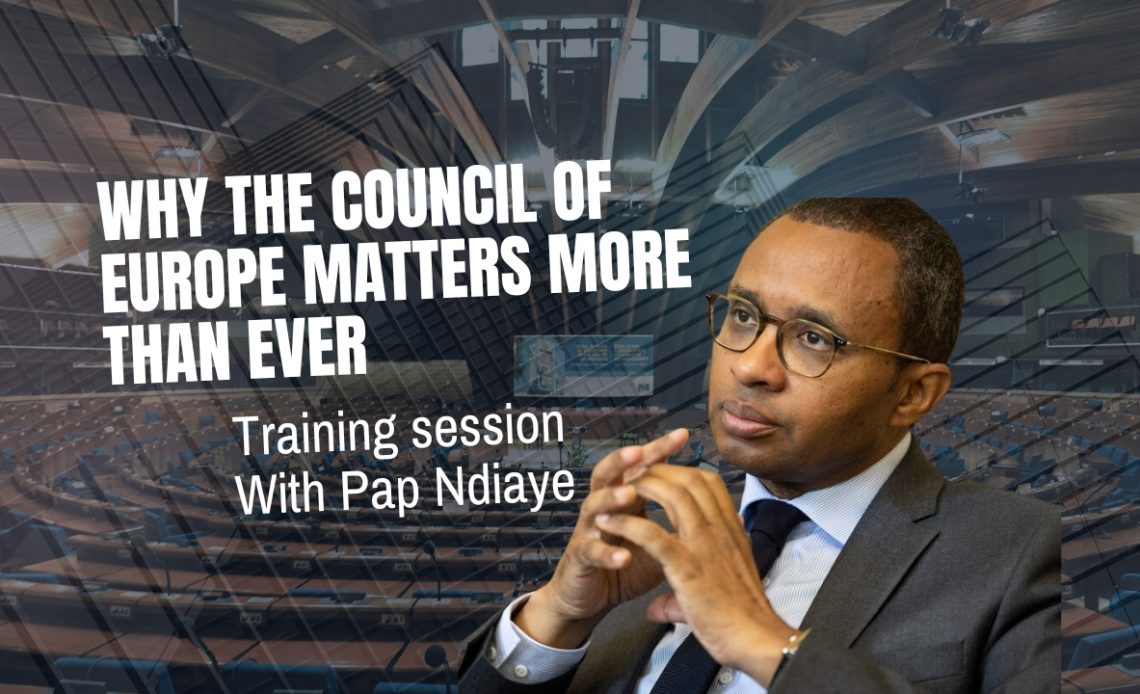
Quatre-vingt-un ans après la fin de la Seconde Guerre mondiale, le Conseil de l'Europe reste l'un des piliers centraux du continent pour la protection des droits de l'homme, la promotion de la démocratie et la sauvegarde de l'État de droit. En tant que pays fondateur et hôte, la France joue un rôle particulièrement important au sein de cette institution. Lors d'une récente rencontre avec l'ambassadeur de France auprès du Conseil de l'Europe, plusieurs thèmes clés ont émergé concernant la mission de la représentation française et les défis auxquels l'Europe est confrontée aujourd'hui.
Une mission ancrée dans la diplomatie et les valeurs démocratiques
La Représentation permanente de la France agit au nom du ministère français des Affaires étrangères. Sa mission principale consiste à participer aux travaux quotidiens des organes du Conseil de l'Europe, en particulier du Comité des ministres, afin de veiller à ce que les positions et les valeurs de la France soient prises en compte dans les décisions, les recommandations et les procédures de suivi
L'ambassadeur a souligné une vérité simple mais fondamentale :
« Défendre les droits humains, c'est faire de la politique. »
Sans institutions solides, sans éducation et sans engagement politique, les systèmes démocratiques peuvent s'effondrer.
Il a souligné que la diplomatie restait l'outil le plus important pour prévenir les conflits. Il ne s'agit pas simplement d'un protocole, mais d'un mécanisme permettant la compréhension, la négociation et, en fin de compte, la paix. Selon lui, la diplomatie est « une manière de faire les choses » et de protéger les sociétés démocratiques contre la dérive vers la violence.
Défis actuels : la Russie, l'Ukraine et la fragilité de la démocratie
Le contexte géopolitique actuel influence considérablement le travail du Conseil de l'Europe. Depuis l'invasion à grande échelle de l'Ukraine par la Russie et l'expulsion de cette dernière du Conseil, l'institution est soumise à une pression sans précédent. La guerre a mis en évidence la fragilité des systèmes démocratiques dans la région et l'urgence de défendre les valeurs fondamentales que le Conseil a été créé pour préserver.
L'ambassadeur a souligné que des pays tels que la Russie, la Géorgie, l'Azerbaïdjan et la Turquie continuent de susciter des préoccupations en matière de droits de l'homme. Certaines démocraties de la région sont menacées par l'érosion interne, les pressions extérieures, la désinformation, les cyberattaques massives et les ingérences politiques. « Nous ne pouvons pas envoyer l'armée », a-t-il souligné ; au contraire, le Conseil s'appuie sur la diplomatie, les outils juridiques et l'engagement politique pour protéger les droits de l'homme et les principes démocratiques.
La Cour européenne des droits de l'homme : conformité et défis
La Cour européenne des droits de l'homme (CEDH) reste l'une des institutions les plus puissantes du Conseil. Cependant, son efficacité dépend de la volonté des États membres d'appliquer ses arrêts.
Certains États ne se conforment pas entièrement. Par exemple :
- Des milliers de jugements impliquant la Russie restent sans suite.
- aux prisonniers politiques et à la prisonniers politiques et la mise en œuvre des décisions clés :
- Osman Kavala, philanthrope et leader de la société civile turque, est emprisonné depuis 2017 malgré deux décisions contraignantes de la CEDH ordonnant sa libération. Son cas illustre les difficultés rencontrées pour faire respecter les décisions en matière de droits humains et les risques plus généraux que représente pour la société civile la remise en cause de l'indépendance judiciaire.
- Yalçınkaya., un juge turc démis de ses fonctions lors des purges qui ont suivi 2016, a vu son cas examiné par la CEDH, qui a jugé son licenciement illégal. Cette affaire met en évidence les problèmes structurels du système judiciaire turc et les difficultés à garantir le respect des arrêts de Strasbourg.
- Osman Kavala, philanthrope et leader de la société civile turque, est emprisonné depuis 2017 malgré deux décisions contraignantes de la CEDH ordonnant sa libération. Son cas illustre les difficultés rencontrées pour faire respecter les décisions en matière de droits humains et les risques plus généraux que représente pour la société civile la remise en cause de l'indépendance judiciaire.
- L'Azerbaïdjan fait l'objet de critiques pour ses persécutions politiques et ses attaques contre la société civile.
The Ambassador highlighted how the Council of Europe must manage these difficult situations while still maintaining diplomatic engagement.
Pression interne au sein de l'UE
La France assume également une responsabilité particulière, car le Conseil de l'Europe et l'Union européenne sont étroitement liés. Cependant, des tensions existent. Certains États membres de l'UE, comme la Hongrie, remettent régulièrement en cause les positions de l'UE, ce qui crée des tensions et complique le consensus au sein du Comité des ministres, où un seul représentant agit au nom de tous les États membres de l'UE.
Les sanctions et la ligne rouge avec la Russie
L'ambassadeur a clairement indiqué que les actions de la Russie avaient franchi une ligne rouge historique. La décision du Conseil de suspendre puis d'expulser la Russie a marqué un moment important, l'un des plus décisifs de l'histoire de l'organisation. Cette décision reflète une prise de conscience plus large selon laquelle les violations des droits de l'homme et du droit international ne peuvent être tolérées.
L'éducation : fondement de la résilience démocratique
L'ambassadeur a notamment insisté sur l'importance de l'éducation. Selon lui, l'éducation est la principale solution à long terme pour renforcer la résilience démocratique. Sans citoyens éduqués qui comprennent leurs droits, leurs responsabilités et l'importance des institutions démocratiques, « tout s'effondre ».
Conclusion
La Représentation permanente de la France auprès du Conseil de l'Europe joue un rôle crucial dans la gestion de réalités politiques complexes tout en défendant les valeurs qui guident l'institution depuis sa création. Dans un monde marqué par les conflits, la désinformation, le recul de la démocratie et les tensions géopolitiques, le Conseil de l'Europe reste plus essentiel que jamais.
Par le biais de la diplomatie, du droit et de l'engagement politique, la France œuvre à préserver le tissu démocratique européen, à garantir que les droits de l'homme restent au cœur de l'identité européenne et à plaider en faveur de l'application des arrêts critiques de la CEDH, notamment ceux concernant Osman Kavala and Yalçınkaya qui symbolisent la lutte permanente pour la justice et l'État de droit dans les États membres.