

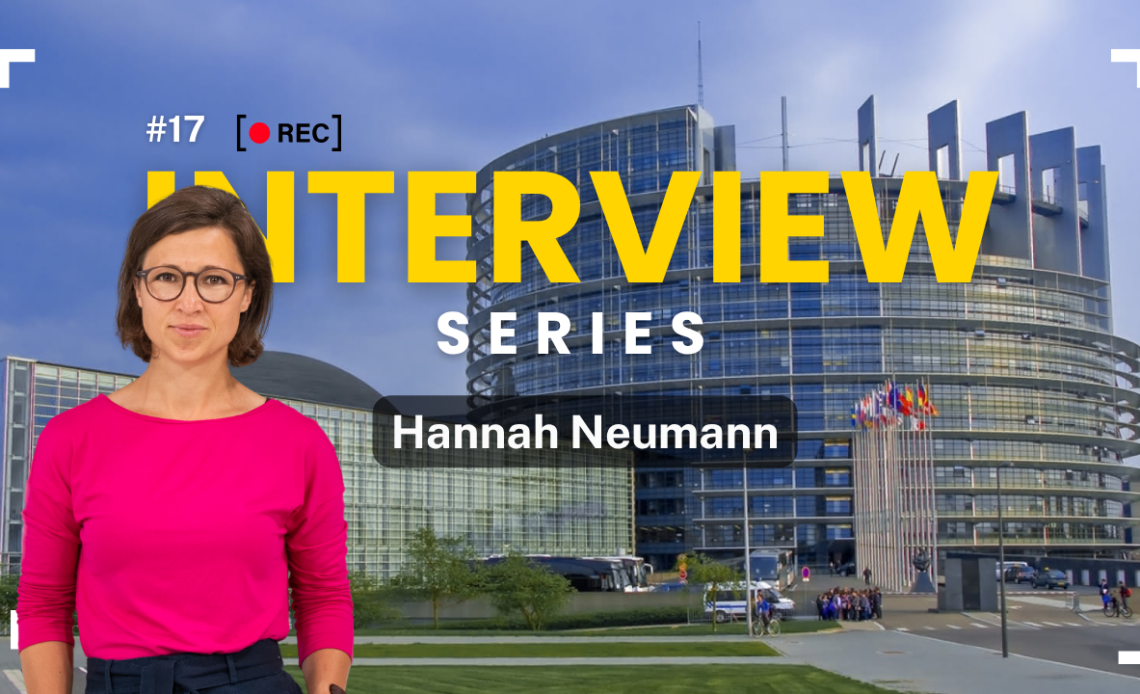
ASSEDEL spoke with Hannah Neumann, Member of the European Parliament from The Greens/EFA, about the growing threat of transnational repression, the need for a coordinated European response, and the role of civil society in protecting dissidents, activists and diaspora communities living in Europe.
A long-overdue European response
Neumann explained that the European Parliament’s report on transnational repression is “long overdue”. While public attention often focuses on the most visible cases, such as assassinations or kidnappings, she stressed that many forms of repression remain hidden. These include intimidation, digital surveillance, financial pressure, consular coercion and threats against family members.
A changing and increasingly digital threat
According to Neumann, authoritarian states are increasingly exchanging tactics, cooperating with organised crime, and exploiting loopholes in European systems. Digital tools, spyware and social media have made it easier for regimes to threaten people from a distance, without needing to operate physically inside the European Union.
When European systems become tools of repression
A central concern raised during the interview was the way in which European systems can be misused to target dissidents. Neumann pointed to examples involving financial blacklists, access to bank accounts, migration procedures and consular services. In her view, the EU must first recognise that its own systems can unintentionally become enablers of transnational repression, and then work to close these loopholes.
The crucial role of civil society
Neumann also underlined the importance of NGOs, human rights organisations and diaspora community structures. Many victims do not report threats to the police, either because they do not trust state authorities due to experiences in their home countries, or because they fear being seen as “troublemakers” while navigating asylum or migration procedures. For this reason, civil society organisations are often the first point of contact for victims and play a crucial role in prevention, documentation and support.
The personal cost of speaking out
The interview also addressed Neumann’s own experience of being targeted. She described how attempts to intimidate her reinforced her decision not to remain silent. However, she also spoke about the emotional cost of this choice, particularly when threats affect family members. Her testimony highlighted one of the most painful dimensions of transnational repression: the use of relatives, especially those in the country of origin, as a means of silencing political voices abroad.
A hidden problem with many unreported cases
For Neumann, the scale of the problem became even clearer after she spoke publicly. Many people contacted her to say that similar things had happened to them, but that they did not know where to report them. This, she argued, shows how large the “dark area” of unreported transnational repression still is in Europe.
ASSEDEL, based in Strasbourg and committed to the promotion of human rights and European values, continues to raise awareness of the threats faced by dissidents, activists, journalists and diaspora communities across Europe.
Watch the full interview on our YouTube channel!