

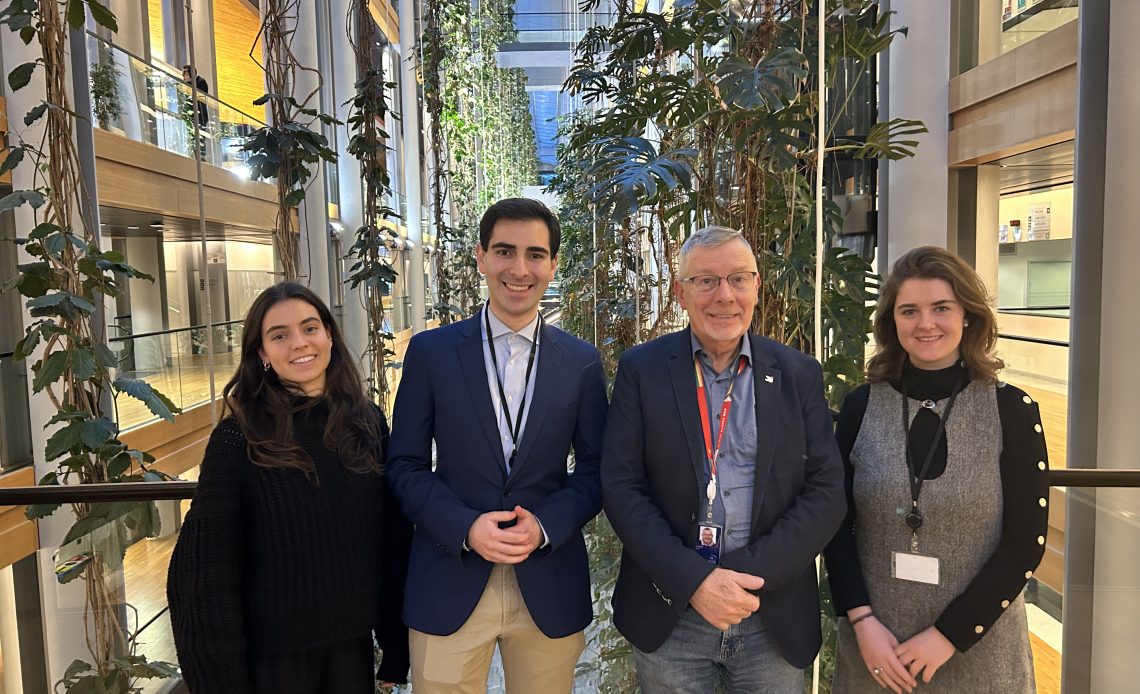
Lors des dernières séances plénières de janvier à Strasbourg, nous avons eu l'occasion de nous entretenir avec Rudi Kennes, député européen indépendant du groupe parlementaire de la Gauche (GUE/NGL) et membre de la commission du commerce international (INTA). M. Kennes est très soucieux du bien-être des citoyens et de la défense de leurs droits, notamment en matière de droits des travailleurs. Il souligne également l'importance de prendre en compte les personnes sans emploi formel, qui contribuent pourtant à la société par leurs activités, même si elles ne sont pas recensées dans les statistiques.
Au cours de notre conversation, il a partagé son point de vue sur l'état des droits de l'homme dans le cadre de la commission INTA et a discuté des principaux défis auxquels le Parlement européen est confronté pour assurer la protection et la promotion des droits de l'homme.
Représentation erronée des citoyens au Parlement européen
En tant qu’ancien syndicaliste, Rudi Kennes reconnaît l’importance de représenter les personnes qui ne disposent pas d’une voix forte au sein du Parlement européen. L’une des principales préoccupations qu’il a soulignées est le manque persistant de communication entre les citoyens qui subissent directement les conséquences des décisions politiques et les responsables politiques chargés de les représenter.
Comme il nous l'a dit : « Je suis le premier ouvrier jamais élu au Parlement européen en Belgique. Qu'est-ce que cela signifie ? (…) On peut discuter de ce qu'est la démocratie, mais pour faire simple, disons que même dans un parlement démocratique et civil, toutes les communautés devraient être représentées, non ? Il est évident que les classes populaires sont sous-représentées. »
M. Kennes souligne par ailleurs que les responsables politiques ne subissent souvent pas l'impact direct de leurs décisions de la même manière que la population. De ce fait, ils peuvent avoir du mal à adopter des mesures efficaces pour remédier aux conséquences négatives de leurs politiques. Il est donc essentiel que les responsables politiques soient conscients des préoccupations des citoyens et qu'ils dialoguent avec eux, au lieu de parler d'eux. Lorsque des accords politiques sont adoptés uniquement en fonction des intérêts des responsables politiques, sans tenir compte des revendications actuelles des citoyens européens, cela constitue une grave erreur et révèle une défaillance plus profonde du système démocratique. Face à de tels développements, les syndicats se mobilisent souvent contre ces changements par le biais de grèves et d'autres formes d'action collective.
Il poursuit : « Je considère toujours une grève aujourd’hui comme un échec (même s’il est important de faire grève). C’est un échec parce que nous n’avons pas été capables de parvenir à un consensus ou à un accord (…). »
Le travail limité mené au sein du comité INTA sur les droits de l'homme
Selon Rudi Kennes, les efforts visant à répondre aux questions humanitaires au sein de la Commission du commerce international (INTA) sont limités en raison du fonctionnement structurel du Parlement européen.
Compte tenu de la composition actuelle du Parlement, les groupes politiques dominants peuvent souvent prendre des décisions sans tenir pleinement compte des points de vue ou du soutien des groupes plus restreints, en particulier ceux de gauche, qui peinent à inscrire des politiques progressistes à l’ordre du jour en raison de la taille réduite de leur groupe.
Il souligne l’importance de disposer d’une majorité afin de contrôler l’ordre du jour de la commission et fait remarquer que la représentation des groupes parlementaires n’est pas suffisamment équilibrée pour garantir que toutes les voix diverses soient prises en compte de manière adéquate.
Ce déséquilibre rend difficile l'introduction de nouveaux sujets à l'ordre du jour de la commission, afin que tous les groupes parlementaires puissent en débattre dans des conditions d'égalité. En fin de compte, il conduit à la marginalisation des préoccupations sociales et humanitaires au profit de priorités politiques plus importantes, telles que les accords économiques et commerciaux.
L'Union européenne perd son autorité morale
Enfin, Rudi Kennes a souligné la capacité limitée de l’Union européenne à convaincre les gouvernements d’agir en défense des droits de l’homme. Il a évoqué l’absence d’un leadership fort au sein de l’UE, affirmant que l’émergence de nouveaux acteurs internationaux, tels que Donald Trump, affaiblit davantage l’engagement en faveur de la préservation des valeurs consacrées par la Charte des Nations unies.
Cette évolution affaiblit encore davantage l’autorité morale de l’UE ainsi que sa crédibilité en tant qu’acteur « respecté » sur la scène internationale.
Alors que la violence s’intensifie dans de nombreuses régions du monde et que les populations continuent de subir les conséquences des conflits et des destructions, l’Union européenne ne se montre pas constante ni ferme dans la condamnation des violations graves des droits de l’homme. Son attitude passive face aux crises en cours reflète un éloignement croissant des priorités humanitaires au profit des objectifs économiques.
M. Kennes cite la situation actuelle à Gaza et l'accord persistant entre l'UE et Israël comme exemple de ce déclin de l'autorité morale : « (…) disons que le point de bascule, à mon avis, est véritablement le débat sur Gaza. Je ne pense pas que l'Union européenne ait encore une autorité morale. Qui sommes-nous aujourd'hui pour dire aux autres pays “vous devez vous comporter ainsi” alors que nous-mêmes ne contestons pas les violations les plus flagrantes du droit international ? »
ASSEDEL, basé à Strasbourg et engagé dans la promotion des droits de l'homme et des valeurs européennes, continue de suivre et d'éclairer les évolutions qui façonnent l'avenir de la démocratie européenne et des relations internationales.