

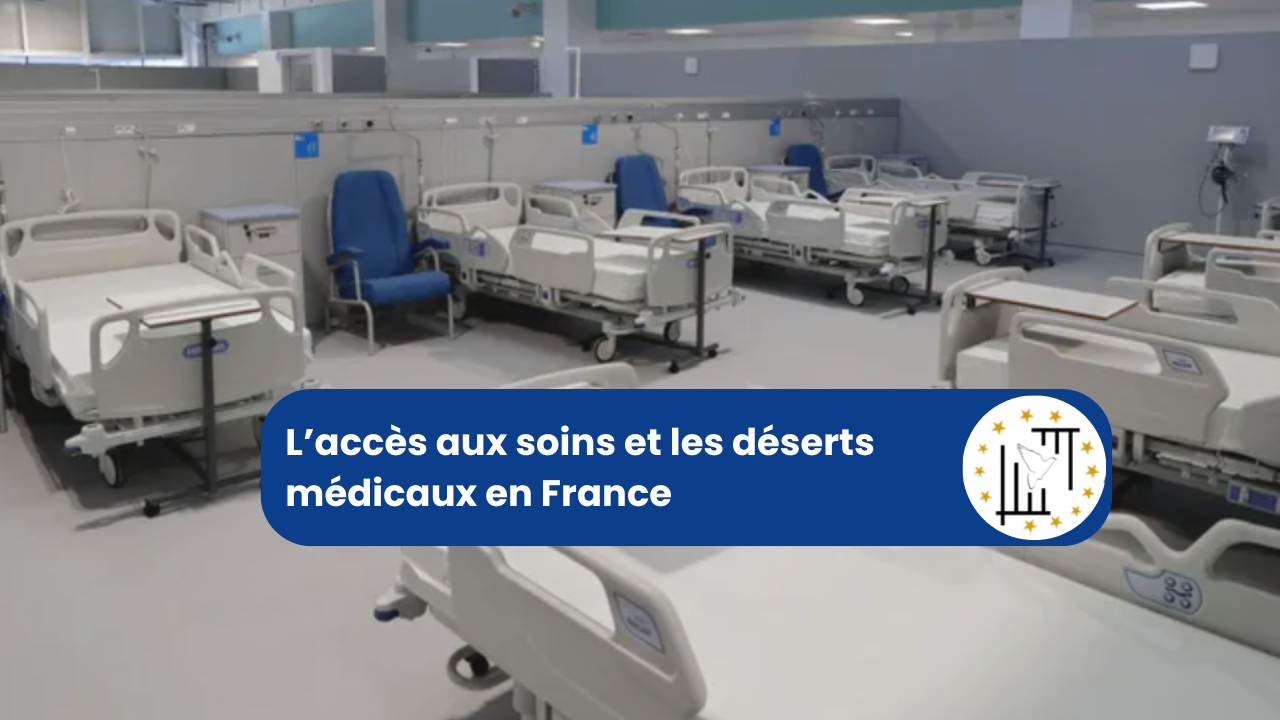
Le terme de « désert médical » s'est imposé dans le débat public comme une expression permettant de désigner les difficultés d'accès aux soins rencontrées dans certains territoires. Bien qu'il ne corresponde à aucune catégorie juridique officielle, ce concept générique est devenu un référentiel central des discussions relatives à la démographie médicale et aux inégalités territoriales de santé. Son succès médiatique et politique tient à sa capacité à rendre visible un phénomène complexe associant pénurie de professionnels de santé, allongement des délais de consultation et difficultés croissantes d'accès aux soins.
Dans son acception la plus courante, le désert médical renvoie à l'insuffisance de l'offre médicale disponible au regard des besoins de la population. Cette situation possède une double dimension. D'une part, une dimension spatiale liée à la distance séparant les patients des professionnels de santé. D'autre part, une dimension temporelle, qui se traduit par l'allongement des délais d'obtention des rendez-vous et la diminution du temps médical disponible par patient.
L’article 35 de la Charte des droits fondamentaux de l’Union européenne énonce le droit à la protection de la santé. Ce droit à la protection de la santé est un objectif à valeur constitutionnelle provenant de l’alinéa 11 du préambule de la Constitution française de 1946. Les diverses valeurs du droit à la protection de la santé montrent que celui-ci est essentiel à tout être humain.
A travers ce rapport, l’ASSEDEL souhaite contribuer à l’amélioration de l’accès aux soins en France et à participer à résoudre, au moins partiellement, la problématique du phénomène appelé “désert médical”. Les rédactrices de ce rapport ne sont pas des expertes dans le domaine médical, mais, pour rédiger ce texte, elles se sont appuyées sur deux entretiens avec des médecins, trois avec des syndicats, ainsi que sur une enquête pilote menée auprès d’une trentaine d’étudiants.
Le rapport de l’ASSEDEL se divise en trois parties: la présentation de la situation, les solutions apportées par la France et leur réception, et enfin les recommandations. La présentation de la situation présente un angle particulièrement important en ce qu’elle concerne spécifiquement en partie la situation dans les territoires d’Outre-mer. Quant à la partie sur les réactions sociétales et les recommandations, le rapport est constitué d’entretiens avec de nombreux syndicats médicaux et des professionnels, soulignant à quel point les avis des professionnels médicaux et des étudiants en médecine sont vitaux.
Premièrement, les causes à l’origine de ce phénomène de “désert médical” sont nombreuses et diverses. On y retrouve le numerus clausus, ayant provoqué une pénurie de médecins en France ; le vieillissement de la population des médecins, en France, un médecin généraliste sur deux en activité est âgé de plus de 55 ans et près de 15 % des médecins ont plus de 65 ans ; la lourdeur de la charge administrative; et enfin le problème plus général de l’attractivité territoriale.
Face à ces problèmes, les législateurs et les gouvernements successifs ont enclenché différentes solutions : les contrats d’engagement de service public (CESP), le dispositif de praticien territorial de médecine générale, les maisons de santé, le développement de la téléconsultation, la suppression du numerus claususles médicobus, et enfin le Pacte de lutte contre les déserts médicaux.
Toutefois, cette ardeur législative et gouvernementale n’est pas forcément toujours la bienvenue. Les deux propositions de lois Mouiller et Garot ont fait couler beaucoup d’encre chez les syndicats médicaux qui n’ont cessé d’exprimer leur opposition face à celles-ci.
Dans le rapport de l’ASSEDEL, une partie est dédiée aux spécificités problématiques que rencontrent les territoires français d’Outre-mer. Sur le plan sanitaire, les Outre-mer présentent des spécificités épidémiologiques importantes, dans un contexte marqué par des conditions socio-économiques plus défavorables qu’en métropole. Malgré les enjeux démographiques et sanitaires croissants, l’offre de soins demeure insuffisante dans certains territoires et peine à s’adapter à l’évolution des besoins. L’accès aux soins en Outre-mer demeure fortement inégalitaire, aussi bien en comparaison avec l’Hexagone qu’entre les différents territoires ultramarins, voire au sein d’un même territoire.
Le rapport de l’ASSEDEL se conclut par une liste de 10 recommandations adressées aux décideurs politiques, parmi lesquelles il y a la promotion de la proposition de loi du syndicat ReAGJIR, l’universitarisation des territoires, et une prise de position claire à l’encontre de la régulation de l’installation des médecins.
L’accès aux soins touche chaque être humain, il est nécessaire de le préserver.
Read ici le rapport complet.