

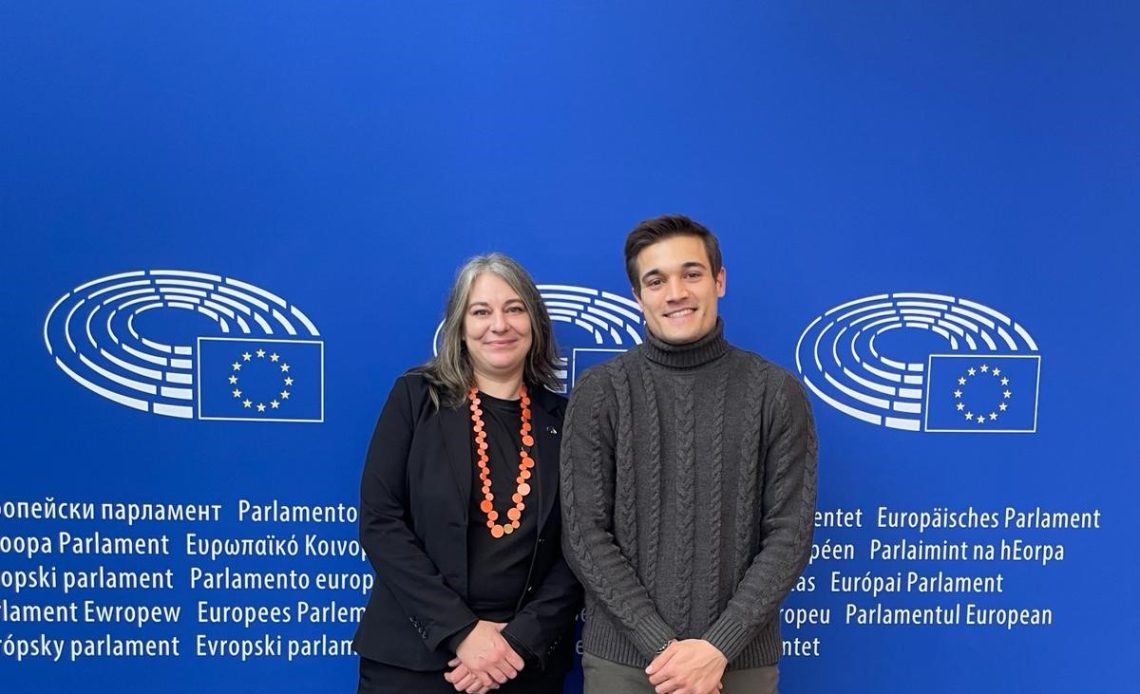
ASSEDEL a eu le plaisir d'interviewer Cecilia Strada, députée européenne italienne membre du Groupe de l'Alliance progressiste des socialistes et démocrates et ancienne présidente de l'ONG Emergency.
L'entretien portait sur la question migratoire, thème central de la dernière session plénière du Parlement européen à Strasbourg. Les députés européens ont voté en faveur de la première liste européenne de « pays d'origine sûrs » pour les demandeurs d'asile, ainsi que de nouvelles règles définissant les critères permettant de classer un pays tiers comme sûr.
Conformément à la proposition de la Commission européenne, la liste commune initiale comprend le Bangladesh, la Colombie, l’Égypte, l’Inde, le Kosovo, le Maroc et la Tunisie. L’établissement de cette liste permettra d’accélérer le traitement des demandes d’asile déposées par les ressortissants de ces pays.
Pour Strada, l'approbation de cette liste est un symptôme clair de la dérive inquiétante que prend l'Union européenne, où la politique est dictée par la propagande plutôt que par des faits avérés. Elle nous explique l'importance de l'expérience de terrain et de l'empathie, et exhorte les citoyens à agir pour faire entendre leur voix.
Quelle direction pensez-vous que prend l'Union européenne sur les questions de migration et d'asile ?
Je pense que l'UE prend la mauvaise direction. Les migrants sont la cible des pires propagandes ; ils sont instrumentalisés par la droite, voire parfois par le centre droit, pour promouvoir leur programme politique et remporter les élections en obtenant le consentement des électeurs grâce à de fausses informations.
Partons du principe que tous, de la Confindustria à la Banque centrale italienne en passant par la Banque centrale européenne, nous disent que nous avons besoin de travailleurs étrangers, que notre système économique repose sur ce besoin. La plupart des pays européens sont aujourd'hui confrontés à un hiver démographique et ont besoin de main-d'œuvre étrangère. La question qui se pose est donc : comment garantir la sécurité de l'arrivée de ces travailleurs ?
L'Union européenne, au contraire, prend la direction opposée. Elle recourt à une stratégie de propagande visant à convaincre les citoyens européens que l'immigration est une urgence. Un mythe fallacieux, démenti par les données de Frontex et d'Eurostat, qui montrent une diminution des arrivées et des demandes d'asile. Ce n'est pas forcément une bonne chose, car cela pourrait signifier que des personnes sont bloquées dans des pays de transit, dans des camps de concentration comme en Libye, sans qu'il y ait d'urgence.
Ce qui me révolte profondément, c'est la déshumanisation des migrants, instrumentalisés et réduits à l'état d'objets. On entend dire que des puissances étrangères ennemies exploitent les migrants et les poussent vers nos frontières. Si tel était le cas, ce serait pour moi une raison de plus de protéger ces personnes exploitées. Au lieu de cela, les institutions européennes y voient un prétexte pour construire des murs, pour les refouler.
Pensez-vous que les gens devraient s'inquiéter ?
Je pense que nous devrions observer ce qui se passe aux États-Unis et nous demander sincèrement : est-ce vraiment ce que nous voulons ? Car il me semble que nous prenons la même direction, certes avec moins de violence visible, sans pour autant tirer sur les citoyens européens, mais cette direction, c'est celle des expulsions et de la restriction des droits. Nous devons être prudents, car lorsque les droits d'une personne sont bafoués, lorsque nous acceptons que les personnes au pouvoir puissent décider de nier les droits fondamentaux, ce n'est qu'une question de temps avant que d'autres ne subissent le même sort, simplement parce qu'une personne au pouvoir l'a décrété.
La leçon que j'en tire, c'est que soit les droits de chacun sont garantis, soit chacun est en danger. Malheureusement, nous nous dirigeons vers une voie tellement inquiétante que nous devrions tous nous sentir menacés. L'une des conséquences de la politique menée par l'UE est l'externalisation des frontières, dont l'accord entre l'Albanie et l'Italie est un exemple flagrant.
Pensez-vous que nous soyons seulement au début du processus d'externalisation ? Des mesures efficaces sont-elles prises pour assurer le fonctionnement des centres albanais à l'avenir ?
Les centres albanais diffèrent de ce qu'envisage l'UE avec cette nouvelle approche, qui privilégie les centres de rapatriement situés dans des pays tiers et dotés d'une pleine juridiction, tandis que les centres en Albanie resteraient sous juridiction italienne. C'est un exemple flagrant de ce qu'il ne faut pas faire, car même sous juridiction italienne, il est impossible de garantir les droits fondamentaux si le centre est situé hors du territoire italien.
Je me suis rendue en Albanie à trois reprises pour inspecter le centre. Mes collègues du Parlement italien et du Parlement européen s'y sont également rendus, et à chaque fois, nous avons constaté de graves violations des droits humains. Les centres en Italie sont par ailleurs à moitié vides ; la construction de celui en Albanie était donc inutile.
Quoi qu’il en soit, nous, sociaux-démocrates, continuerons à lutter pour les droits de chacun et nous verrons ensuite si les juges nationaux choisiront d’agir et de saisir la Cour de justice de l’Union européenne, afin de déterminer si tout ce qui se passe est conforme au droit international et aux valeurs et principes énoncés dans la Charte des droits fondamentaux de l’Union européenne.
Dans le cadre de votre travail politique, quelle importance revêt le fait d'avoir personnellement vécu certaines réalités avant d'en parler ici, au Parlement européen ?
Je me sens très chanceuse d'être entrée dans le monde politique après de nombreuses années passées à faire autre chose, comme opératrice humanitaire, à œuvrer sur le terrain pour la protection des droits humains. Certes, j'ai moins d'expérience en politique et en négociation que mes collègues qui y consacrent leur vie, mais je compte bien apprendre. J'ai d'autres atouts : mon odorat est comme une boussole, car sur le terrain, tout a une odeur, on peut toucher les choses de ses propres mains ; je reconnais même l'odeur d'un enfant qui a marché sur une mine.
Ces mêmes mines antipersonnel que différents pays européens veulent maintenant remettre en production. Cela me révolte, car c'est l'un de mes premiers combats en tant que militante. J'avais 14 ans quand j'ai commencé à militer pour l'interdiction des mines antipersonnel. Aujourd'hui, je me demande si ceux qui militent pour leur réintroduction ont déjà vu une personne blessée par une mine, car j'en ai vu des centaines sur le terrain, et je sais pertinemment que les mines antipersonnel ne peuvent rien apporter de bon. Il en va de même pour les politiques migratoires : ces personnes ont-elles déjà pris la mer ? L'un des grands avantages de travailler au Parlement européen est de disposer d'un budget et du temps nécessaires pour aller travailler sur le terrain.
Je suis allée à Calais pour rencontrer les personnes qui tentent de traverser la Manche et qui vivent cachées pour échapper aux brutalités de la ceinture de sécurité française. Je suis allée en Albanie ; j'ai participé à une mission sur l'île de Kos, en Grèce, pour visiter le centre de rétention administrative. J'ai visité le CPR, munie de mon badge de parlementaire européen qui nous offre cette formidable opportunité d'inspecter ces centres. Le terrain est essentiel pour moi.
J’ai dit à ceux d’où je viens, aux associations, à mes anciens collègues, à mes amis qui travaillent encore dans le domaine, de me tirer par l’oreille et de me ramener balayer le pont d’un bateau s’ils voyaient que je n’utilise plus mon nez pour distinguer le bien du mal en politique.
Dans le travail que vous effectuez au Parlement avec vos collègues, pensez-vous qu'il existe un sujet qui vous tient à cœur et qui est systématiquement exclu du débat politique ?
Je crois que ce qui nous manque, c'est de considérer les gens comme des êtres humains et non comme de simples catégories. Si nous ne les considérons pas comme tels, il est plus facile de manquer d'empathie. C'est la même chose pour les Palestiniens : nous ne les voyons que comme des numéros. Nous devrions parler d'eux, leur donner des noms et des visages. Sinon, quand nous lisons « 53 morts en Méditerranée », nous ne voyons qu'un chiffre, nous tournons la page et nous n'y pensons plus.
Et puis, bien sûr, il faut bannir toute propagande du débat. Tout le monde s'accorde sur la nécessité de réguler les flux migratoires, mais pas au détriment de la protection des droits fondamentaux. La fermeture totale des frontières que réclament la droite, l'extrême droite et le centre droit n'est pas réaliste, et même si elle l'était, elle ne serait pas souhaitable : nous avons besoin de travailleurs étrangers.
Comment pensez-vous que nous devrions lutter contre la propagande ?
Ce n'est pas chose facile, car les concepts à expliquer sont complexes et les slogans, même mensongers, sont accrocheurs. Ceux qui veulent travailler honnêtement sont désavantagés, mais nous devons persévérer. Il nous faut peut-être trouver de nouvelles façons de communiquer, mais le seul moyen de combattre la propagande reste les faits concrets.
Pour conclure, avez-vous un message d'espoir pour les jeunes ?
Considérez l'Europe comme votre foyer, réfléchissez à la manière dont vous souhaitez la façonner. Nous sommes l'Union européenne ; nous avons des élections directes pour le Parlement, le Conseil est l'expression des gouvernements nationaux, eux aussi élus par les citoyens. Nous oublions parfois que le peuple a du pouvoir ; nous devons voter, manifester, faire grève. Nous devons rajeunir le Parlement européen, nous avons besoin d'idées neuves, d'expériences nouvelles. L'UE est votre foyer ; si la situation actuelle ne vous convient pas, ne partez pas, changez-la !
ASSEDEL, basé à Strasbourg et engagé dans la promotion des droits de l'homme et des valeurs européennes, continue de suivre et d'éclairer les évolutions qui façonnent l'avenir de la démocratie européenne et des relations internationales.