

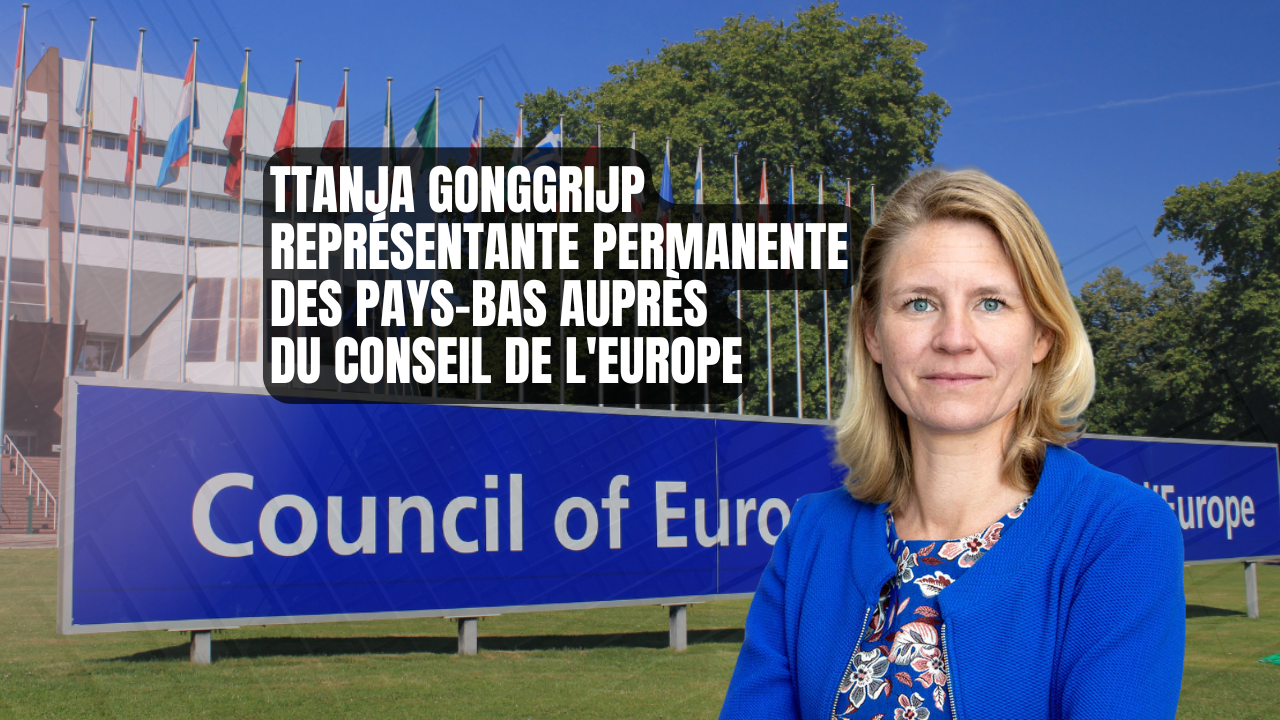
Comment un État membre traduit-il ses priorités politiques en actions institutionnelles au sein du Conseil de l'Europe ? C'est autour de cette question que s'est articulée notre session de formation avec Tanja Gonggrijp, représentante permanente des Pays-Bas auprès du Conseil de l'Europe. Son intervention a permis de brosser un tableau détaillé du fonctionnement interne de l'organisation : comment les priorités sont définies, comment les normes sont négociées et comment les mécanismes de suivi fonctionnent.
Plutôt que de se concentrer sur des principes abstraits, la session a mis en lumière l’architecture institutionnelle qui sous-tend le travail quotidien du Conseil de l’Europe. M. Gonggrijp a expliqué comment une représentation permanente fait office à la fois d’avant-poste diplomatique et de centre de coordination : elle représente les intérêts nationaux à Strasbourg tout en rendant compte à la capitale, en relayant les messages politiques et en veillant à la cohérence entre la politique nationale et les engagements internationaux. En ce sens, ce travail est intrinsèquement bidirectionnel. Les instructions émanent des gouvernements nationaux, mais les retours d’information des organes de contrôle et les débats politiques à Strasbourg sont également transmis aux ministères dans les pays d’origine.
L'élaboration de normes en tant que processus juridique et politique
L'un des piliers institutionnels fondamentaux du Conseil de l'Europe réside dans l'élaboration de normes par le biais de conventions et de traités. Avec plus de 200 instruments juridiques couvrant des domaines tels que la lutte contre la corruption, la cybercriminalité, la traite des êtres humains, la violence à l'égard des femmes, la lutte contre le blanchiment d'argent et la gouvernance démocratique, l'organisation agit en tant qu'organe normatif dont la portée s'étend bien au-delà du continent européen. Certaines conventions sont des accords « élargis » ou « partiels », permettant à des États non membres d'y adhérer. Cette expansion illustre le rôle du Conseil en tant que référence mondiale en matière de normes juridiques dans les domaines de l'État de droit et des droits de l'homme.
Cependant, M. Gonggrijp a souligné que la ratification d'une convention n'est pas un simple geste symbolique. Elle crée des obligations juridiques contraignantes et met en place des mécanismes de surveillance qui nécessitent un suivi structuré. Lorsqu'un État signe et ratifie un instrument, il s'engage non seulement à aligner sa législation, mais aussi à se soumettre à des procédures de rapport, à accueillir des visites d'évaluation et à donner suite aux recommandations formulées par des instances d'experts indépendantes.
Mécanismes de suivi et coordination nationale
C'est souvent au niveau du suivi que la complexité institutionnelle apparaît le plus clairement. De nombreuses conventions prévoient la mise en place de groupes d'experts indépendants chargés d'évaluer le respect des dispositions par les États. Ces experts ne sont pas des représentants des gouvernements ; ils agissent à titre personnel et publient des rapports évaluant les cadres législatifs, les pratiques institutionnelles et la mise en œuvre concrète.
Une fois ce rapport adopté, le processus entre dans une phase nationale hautement technique et interministérielle. M. Gonggrijp a expliqué qu’aux Pays-Bas, certaines recommandations peuvent concerner simultanément les ministères de la Justice, des Affaires étrangères, de la Santé, de l’Éducation ou de l’Intérieur. Le rapport est transmis aux services concernés, des consultations internes ont lieu, des propositions de réforme sont rédigées et une réponse officielle est préparée dans un délai déterminé. L'État dispose alors d'un délai défini — souvent de trois ans — pour mettre en œuvre les recommandations et rendre compte de ses actions.
Le Comité des ministres et le suivi des arrêts
Une partie importante de la session a été consacrée au rôle du Comité des ministres, l'organe décisionnel du Conseil de l'Europe composé des ministres des Affaires étrangères de ses 46 États membres. Dans la pratique, il se réunit chaque semaine au niveau des adjoints — les représentants permanents à Strasbourg — et une fois par an au niveau ministériel. L'une de ses principales responsabilités consiste à superviser l'exécution des arrêts de la Cour européenne des droits de l'homme.
Ce mécanisme de contrôle est unique dans l'architecture mondiale des droits de l'homme. Dès lors que la Cour constate une violation, l'État défendeur est légalement tenu, en vertu de l'article 46 de la Convention, d'exécuter l'arrêt. Cette exécution implique le versement d'une satisfaction équitable, l'adoption de mesures individuelles visant à remédier à la situation du requérant et, le cas échéant, de mesures générales telles qu'une réforme législative afin de prévenir de telles violations à l'avenir.
Le Comité des ministres examine les progrès accomplis lors de réunions consacrées aux droits de l'homme qui se tiennent quatre fois par an. Les affaires peuvent faire l'objet d'une surveillance standard ou renforcée, en fonction de leur complexité et de leur sensibilité. Le Département chargé de l'exécution des arrêts apporte son aide en élaborant des analyses juridiques, en identifiant les problèmes structurels, en proposant des décisions et en apportant son expertise technique aux États. Si c'est au Comité qu'il revient en dernier ressort de prendre les décisions politiques, son travail repose largement sur une évaluation juridique.
Cette session a mis en évidence une réalité institutionnelle fondamentale : le système du Conseil de l'Europe est sophistiqué et juridiquement solide, mais son efficacité dépend d'une volonté politique soutenue. Les normes, les mécanismes de suivi et les procédures de contrôle créent un cadre de responsabilité, mais leur mise en œuvre nécessite des réformes nationales, des engagements budgétaires et une coordination interministérielle.
Dans un contexte marqué par les tensions géopolitiques et le recul de la démocratie, le Conseil de l'Europe reste un laboratoire de la gouvernance multilatérale — imparfait, souvent lent, mais qui n'en reste pas moins l'un des systèmes de protection des droits de l'homme les plus complets au monde.