

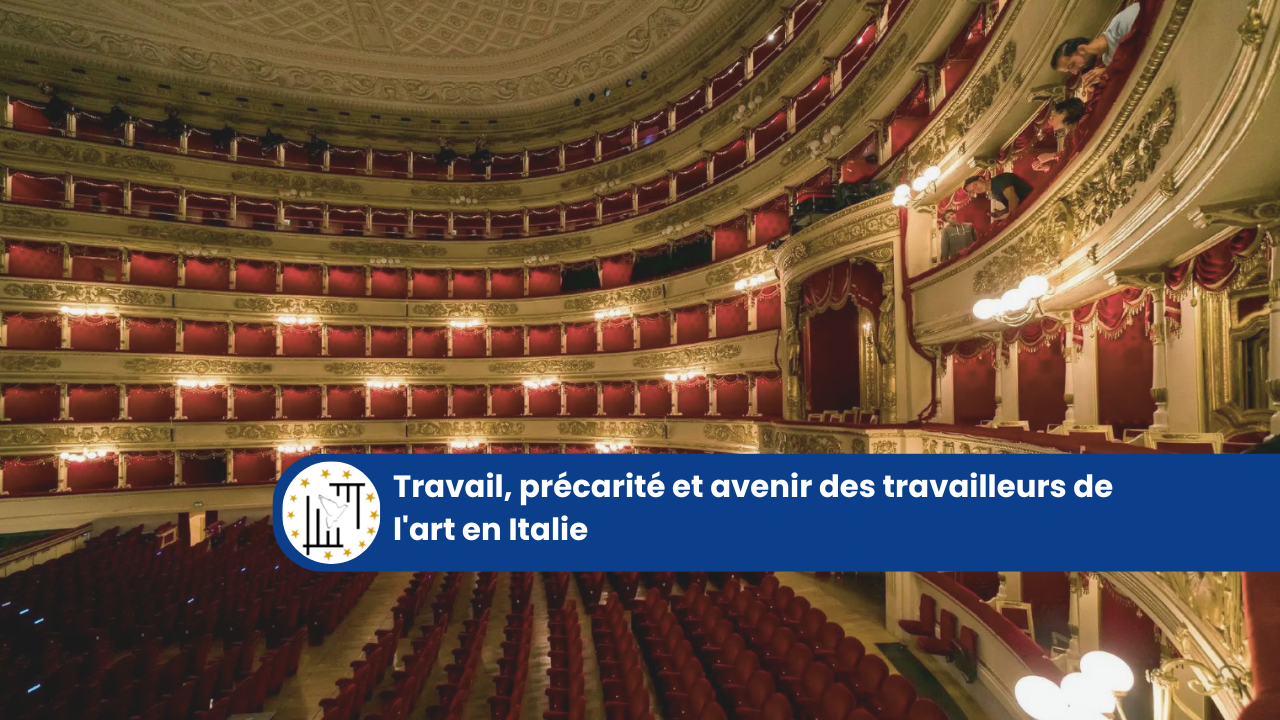
Bien qu'ils soient le pilier de l'une des plus grandes économies culturelles au monde, les travailleurs de l'art en Italie sont confrontés à l'instabilité de l'emploi, à de bas salaires et à un système structurellement conçu pour les maintenir dans une dépendance matérielle et un silence institutionnel. Pour appréhender cette situation, le rapport vise à examiner le cadre institutionnel qui la perpétue, ainsi que les causes plus larges qui contribuent à façonner une telle précarité.
Une fête née de la lutte
La fête du Travail commémore les événements de Haymarket à Chicago en 1886, lorsque des travailleurs en grève réclamant la journée de huit heures se sont heurtés à la police, déclenchant un élan de solidarité internationale qui a fait du 1er mai un symbole mondial des droits des travailleurs. En Italie, la tradition remonte aux dockers de Livourne qui manifestèrent en solidarité avec les victimes. Depuis 1990, l'occasion donne lieu à un grand concert à Rome organisé par les principaux syndicats nationaux — la CGIL, la CISL et l'UIL — une tribune où musiciens, syndicalistes et politiciens dénoncent ouvertement les conditions auxquelles sont soumis les travailleurs de la culture.
La place centrale de la musique live dans ce programme n'est pas fortuite. En réalité, elle reflète le rôle pivot que jouent les arts dans l'identité nationale italienne, tout en exposant simultanément les inégalités structurelles qui rendent si difficile de gagner sa vie au sein de ce même secteur. Afin de comprendre la situation dans son ensemble, il est nécessaire d'observer à la fois les politiques publiques qui façonnent les conditions des travailleurs culturels et les forces structurelles plus profondes qui ont fini par normaliser l'instabilité.
Cartographier le secteur culturel : cadre politique
Avant d'analyser les politiques, il est essentiel de définir ce que signifie réellement « le secteur des arts ». Il s'agit d'un écosystème complexe et évolutif englobant les arts visuels, la musique, le spectacle vivant, la littérature, le cinéma, le design et le patrimoine culturel — des disciplines qui n'existent pas de manière isolée, mais circulent plutôt au sein d'un système interconnecté de planification, de production et de distribution.
La gouvernance culturelle de l'Italie est ancrée dans l'article 9 de la Constitution, le ministère de la Culture étant la principale autorité. Les outils de financement clés comprennent le Fondo Unico per lo Spettacolo (FUS) pour le spectacle vivant et l'incitation fiscale ArtBonus pour les dons privés.
Au niveau de l'UE, le programme Europe Créative finance la collaboration transfrontalière, tandis que la résolution du Parlement européen de 2023 sur le statut de l'artiste a appelé à des définitions de l'emploi plus claires, à une rémunération plus juste et à des protections sociales plus fortes, bien que l'écart entre les objectifs politiques et la réalité demeure important.
Malgré cette infrastructure, des défis systémiques persistent. La résolution du Parlement européen de 2023 sur le statut de l'artiste a explicitement reconnu les conditions précaires des travailleurs de la culture à travers l'UE, appelant à une coordination plus étroite, à des définitions plus claires du statut d'emploi, à des mesures de lutte contre le faux travail indépendant et à une amélioration des normes de rémunération. Cette résolution a certes marqué une étape importante, mais elle reste insuffisante pour combler le fossé de la précarité qui affecte de manière disproportionnée les travailleurs culturels.
La réalité de la précarité
Pour les milliers d'Italiens qui travaillent dans le secteur culturel, la précarité est une réalité quotidienne. Selon les données d'Eurostat citées dans le rapport 2025 du ministère de la Culture, Minicifre della cultura rapport, les travailleurs de la culture en Italie s'élevaient à environ 840 000 en 2024, soit approximativement 3,5 % de l'emploi national total. Pourtant, ce chiffre place l'Italie en dessous de la moyenne de l'UE (3,8 %) : c'est sans aucun doute un écart notable pour un pays largement considéré comme l'un des plus importants au monde sur le plan culturel.
Selon le rapport Io sono Cultura 2025 de Symbola et Unioncamere, 36,5 % des travailleurs du secteur culturel et créatif en Italie sont des travailleurs indépendants, contre une moyenne nationale de 21,2 %. Cette dépendance structurelle au travail indépendant et en freelance limite les possibilités de négociation collective et accentue le caractère informel et précaire de l'emploi dans ce domaine. Curieusement, il s'agit d'un schéma typique des industries culturelles dans les pays d'Europe du Sud, dont l'Italie est un exemple frappant.
Les conséquences sont visibles au niveau des revenus. Selon les enquêtes sectorielles et les rapports syndicaux, les professionnels de la culture gagnent en moyenne moins de 12 000 € par an, un chiffre qui reste désespérément bas depuis des décennies. L'emploi est principalement basé sur des projets et de l'intermittence, avec peu de travailleurs bénéficiant de contrats stables qui leur permettraient d'accéder aux protections sociales classiques, telles que les allocations chômage, les cotisations de retraite ou les congés de maladie payés.
De plus, l'inégalité géographique doit être prise en compte. Un tiers de l'ensemble des travailleurs du secteur culturel est concentré dans le nord-ouest de l'Italie, avec 27 % en Italie centrale. Le Mezzogiorno, c'est-à-dire le sud et les îles, est gravement sous-représenté, laissant les travailleurs de ces régions avec moins de réseaux professionnels et de plus grandes distances par rapport aux centres de décision qui contrôlent l'allocation des fonds publics. Beaucoup sont contraints de migrer vers Milan, Rome ou à l'étranger pour simplement pouvoir poursuivre leur carrière.
Un système conçu pour l'instabilité
Claudia Fauzia, consultante italienne en diversité et égalité, propose une réponse structurelle plutôt qu'individuelle à cet état chronique de sous-rémunération et d'instabilité : le système, soutient-elle, est conçu pour maintenir la précarité. Les salaires versés aux travailleurs de la culture ne suffisent pas pour vivre, et beaucoup accomplissent en réalité ce qui s'apparente à un travail bénévole ou fortement subventionné, soutenu par la passion et l'espoir d'une stabilité future. Cependant, cela ne peut être résolu par le simple refus d'accepter de mauvaises conditions, car il y aura toujours quelqu'un d'autre disposé à les accepter.
La précarité, soutient Fauzia, n'est pas un effet collatéral du système, mais bien une fonction de celui-ci. Maintenir ceux qui façonnent la culture dans un état de fragilité matérielle est un mécanisme efficace pour les rendre politiquement et institutionnellement insignifiants. Les institutions publiques financent le travail culturel juste assez pour le légitimer, mais pas suffisamment pour le rendre autonome. Le résultat est une classe de travailleurs créatifs hautement qualifiés qui dépendent structurellement de l'État et de la bienveillance de mécènes privés, et qui, par conséquent, manquent d'indépendance pour contester les conditions qui leur sont imposées.
De plus, cette dépendance est géographiquement concentrée : elle est plus aiguë là où les communautés et les réseaux professionnels sont les plus faibles, là où les distances par rapport aux centres de décision sont les plus grandes, et là où les travailleurs doivent finalement partir pour survivre. Ce qui apparaît comme une précarité individuelle est en réalité une dispersion délibérée des compétences. La réponse appropriée, suggère Fauzia, est de recadrer le récit : passer des lacunes individuelles à la responsabilité collective. Il est essentiel de construire des structures économiques, organisationnelles et territoriales robustes autour du travail culturel pour éviter de s'abandonner entièrement à ce système.
La pandémie de COVID-19 a exacerbé les vulnérabilités existantes. Comme l'a rapporté la journaliste Roberta Capozucca dans le journal Il Sole 24 Ore, la fragmentation du secteur en petites entreprises et en travailleurs indépendants a empêché de nombreuses catégories d'être incluses dans les stratégies d'urgence du gouvernement.
Les artistes plasticiens, par exemple, ont été totalement exclus de la prime d'urgence de 600 € destinée à tous les travailleurs du secteur culturel dans le cadre du décret de soutien Cura Italia de 2020. En l'absence d'associations unifiées capables de négocier collectivement, des catégories professionnelles entières se sont retrouvées sans aucun soutien.
Cet épisode illustre une vérité plus large : la diversité des catégories professionnelles, qui fait la richesse culturelle du secteur, devient un handicap en temps de crise lorsqu'il n'existe pas de voix unifiée pour négocier au nom des travailleurs.
La nouvelle frontière de l'intelligence artificielle
Aux vulnérabilités structurelles déjà décrites s'ajoute une nouvelle menace qui progresse rapidement : l'intelligence artificielle. En fait, elle est en train de devenir une infrastructure, un système entièrement nouveau qui redéfinit les conditions du divertissement, de la communication et de la production visuelle et numérique.
Les premiers rôles touchés sont principalement techniques. Les designers sonores, les étalonneurs et les spécialistes de la post-production voient leurs compétences fondamentales absorbées par des logiciels de plus en plus rapides et précis. Ce qui nécessitait autrefois une main-d'œuvre qualifiée, du temps et un équipement spécialisé peut désormais être produit de manière algorithmique pour une fraction du coût initial. Pour les jeunes créatifs et les nouvelles générations qui entrent sur le marché du travail, ce changement est encore plus lourd de conséquences, car ils sont désormais en concurrence dans un paysage où l'IA peut générer des images, des vidéos et de la musique à un coût considérablement réduit et avec une qualité relativement élevée.
Pour un secteur déjà défini par des bas salaires et des contrats précaires, cela représente un changement radical dans les conditions de concurrence, pour lequel ni les travailleurs ni les institutions publiques ne sont pleinement préparés. Mais le défi est tout autant politique qu'économique : si les professions créatives ont historiquement offert une autonomie et une irremplaçabilité qui compensaient plus ou moins l'instabilité matérielle, la disparition de cette singularité au profit d'une production non humaine supprime le seul avantage structurel que possédaient les travailleurs de la culture.
Sans des réponses collectives fortes de la part des syndicats, des associations professionnelles et des décideurs politiques, les travailleurs les plus vulnérables du secteur risquent d'être totalement mis sur la touche. L'urgence de développer des cadres de gouvernance de l'IA qui protègent le travail culturel est aussi pressante aujourd'hui que l'était la réforme du FUS (Fonds Unique pour le Spectacle) il y a dix ans.
Vers une réforme cohérente
Pris dans leur ensemble, ces défis décrivent un secteur qui a un besoin urgent d'une réforme cohérente et globale. Les conditions des travailleurs de la culture en Italie ne doivent pas être traitées comme une préoccupation de second ordre : ils sont les gardiens d'un patrimoine qui définit l'identité du pays et stimule une part importante de sa production économique. Considérer leur état actuel comme le prix inévitable d'une vocation est à la fois un échec éthique et stratégique.
La députée italienne et membre de l'APCE, Valentina Grippo, dans un récent entretien avec l'ASSEDEL au Palais de l'Europe, identifie un ensemble concret de priorités législatives : l'établissement de normes de rémunération pour les travailleurs de la culture, l'élargissement de l'accès à cassa integrazione (les dispositifs de complément de salaire) et la réforme des mécanismes du assegno unico, tout cela nécessitant une action au niveau législatif national. Les sessions parlementaires passées ont déjà produit des amendements budgétaires visant à augmenter les ressources du FUS, reconnaissant ainsi que de nombreuses professions culturelles sont précaires non pas par accident, mais par leur nature même, car elles sont liées à des productions individuelles plutôt qu'à des structures d'emploi permanentes. Cette réalité structurelle rend essentielles des réponses politiques sur mesure, plutôt que des réformes génériques du marché du travail.
L'argument en faveur de la réforme dépasse toutefois la seule logique économique. Les institutions européennes doivent aborder la protection des travailleurs de la culture sous l'angle des droits : défendre ceux qui font l'art, c'est défendre les droits fondamentaux des citoyens européens, y compris de tous ceux qui bénéficient de la culture en tant que publics, communautés et générations futures. Protéger les travailleurs culturels, c'est, en ce sens, protéger un patrimoine collectif qui appartient à la société dans son ensemble, et non à une seule industrie.
Lire le rapport complet ici.
Sources
Studenti.it , Festa del lavoro 1 maggio: significato e storia della festa dei lavoratori (2026). Available at: https://www.studenti.it/storia-del-1-maggio-festa-dei-lavoratori.html
Il Post, Breve storia del “Concertone” del 1 maggio (2025). Available at: https://www.ilpost.it/2025/05/01/concerto-primo-maggio-storia/
European Parliament, Status of the artist: better working conditions for artists and cultural workers (2023). Available at:
European Commission, Culture moves Europe: How the EU promotes culture and creativity (2024). Available at:
Italian Republic, Costituzione della Repubblica Italiana (1948). Available at:
https://www.cortecostituzionale.it/documenti/download/pdf/Costituzione_della_Repubblica_italiana.pdf
Ministero della Cultura, Sistema museale nazionale (2018). Available at:
https://musei.cultura.gov.it/progetti/sistema-museale-nazionale
ICOM, Code of Ethics for Museums (2017). Available at:
https://icom.museum/wp-content/uploads/2018/07/ICOM-code-En-web.pdf
Direzione generale Educazione, Ricerca e Istituti culturali, Minicifre della cultura (2025). Available at:
Symbola and Unioncamere, Io Sono Cultura (2025). Available at: https://symbola.net/ricerca/io-sono-cultura-2025/
Manuela Rossetti, Vogliamo tutt’altro: quando la crisi del settore è guidata da logiche di schieramento (2025). Available at:
Claudia Fauzia, “Lo faccio perché ci credo.” E intanto non arrivi a fine mese (2026). Available at: https://claudiafauzia.substack.com/p/18-lo-faccio-perche-ci-credo-e-intanto
Roberta Capozucca, Professionisti del settore culturale, chi sopravviverà? (2020). Available at:
https://www.ilsole24ore.com/art/professionisti-settore-culturale-chi-sopravvivera-ADCiueQ
Gianna Angelini, L’impatto dell’AI nel design: svolta creativa e nuovi paradigmi (2024). Available at: